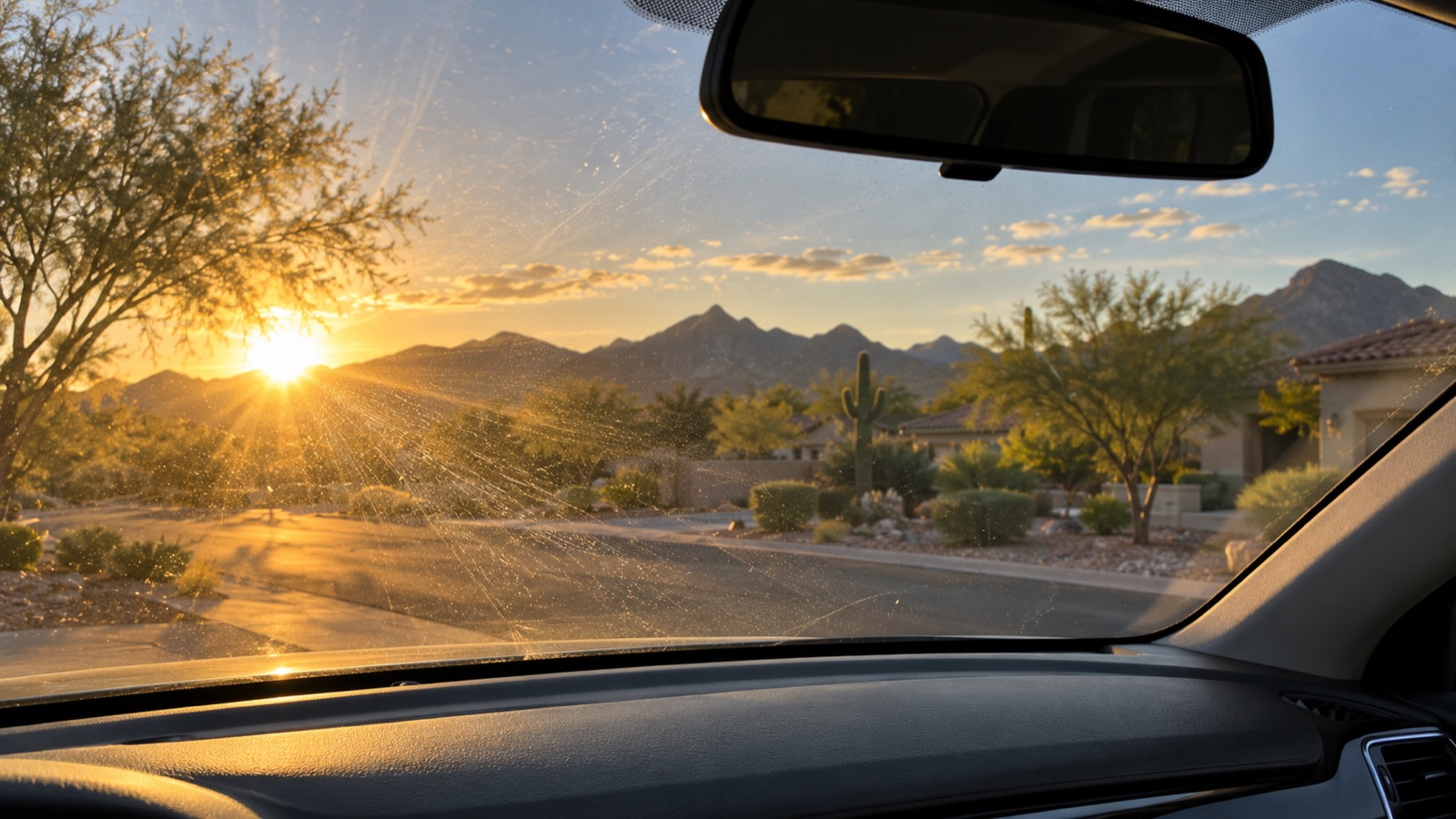
A cracked windshield has a way of interrupting an otherwise ordinary day. One rock on the freeway, a piece of debris during monsoon season, or a small chip that suddenly spreads can leave you wondering what happens next.
The good news is that professional windshield replacement is often much simpler than drivers expect. The process is not only about removing damaged glass. It may also involve identifying the correct windshield, reviewing insurance options, protecting the vehicle during installation, allowing the adhesive to set, and recalibrating safety technology.
At ProView Auto Glass & Tint, we guide Arizona drivers from the first call through the final safety check. Here is what to expect.
The Windshield Replacement Process at a Glance
| Step | What happens | Why it matters |
|---|---|---|
| 1 | Contact ProView | Tell us about the vehicle and the damage. |
| 2 | Review coverage | Understand insurance, deductibles and payment options. |
| 3 | Confirm the glass | Match the windshield to the vehicle and its technology. |
| 4 | Schedule service | Choose a safe, convenient appointment location. |
| 5 | Replace the windshield | Remove, prepare, install and allow the glass to set. |
| 6 | Calibrate and verify | Address ADAS when required and complete final checks. |
Step 1: Contact ProView and Describe the Damage
The process begins with a phone call or online request. Our team will ask for basic vehicle information and details about the damage, including its size, location, and how it happened.
Photos can help with an initial review, but the final recommendation depends on the condition of the glass. A small chip may still qualify for repair. Damage that is spreading, reaches the edge, affects visibility, or compromises the windshield may require replacement.
This first conversation is also the time to mention any unusual features, warning lights, or technology near the rearview mirror. Those details help the shop identify what your vehicle may need before the appointment is scheduled.
Step 2: Review Insurance and Payment Options
Many Arizona drivers have comprehensive insurance coverage that may apply to windshield damage. ProView can help explain the claims process and communicate with the insurance company when appropriate.
Before service begins, confirm whether a deductible applies, whether the insurer has approved the correct glass and procedures, and whether calibration is included when the vehicle requires it.
Step 3: Confirm the Correct Windshield
Modern windshields are not interchangeable sheets of glass. The correct part may depend on the vehicle identification number, trim level, rain sensors, cameras, acoustic layers, solar coatings, antennas, heating elements, or a head-up display.
Using the wrong windshield can create problems that are immediately noticeable, such as a blurry head-up display, or problems that are harder to see, such as poor camera alignment. Confirming the vehicle specifications before installation is one of the most technical and important parts of the process.
Step 4: Schedule a Safe, Convenient Appointment
Once the glass and service details are confirmed, the appointment can be scheduled. Mobile replacement allows the technician to come to an approved location, such as your home or workplace, instead of requiring you to spend part of the day in a waiting room.
The vehicle needs a stable work area with enough room around it, and weather conditions must allow the adhesive and materials to be used properly.
Step 5: Remove, Prepare and Install the Windshield
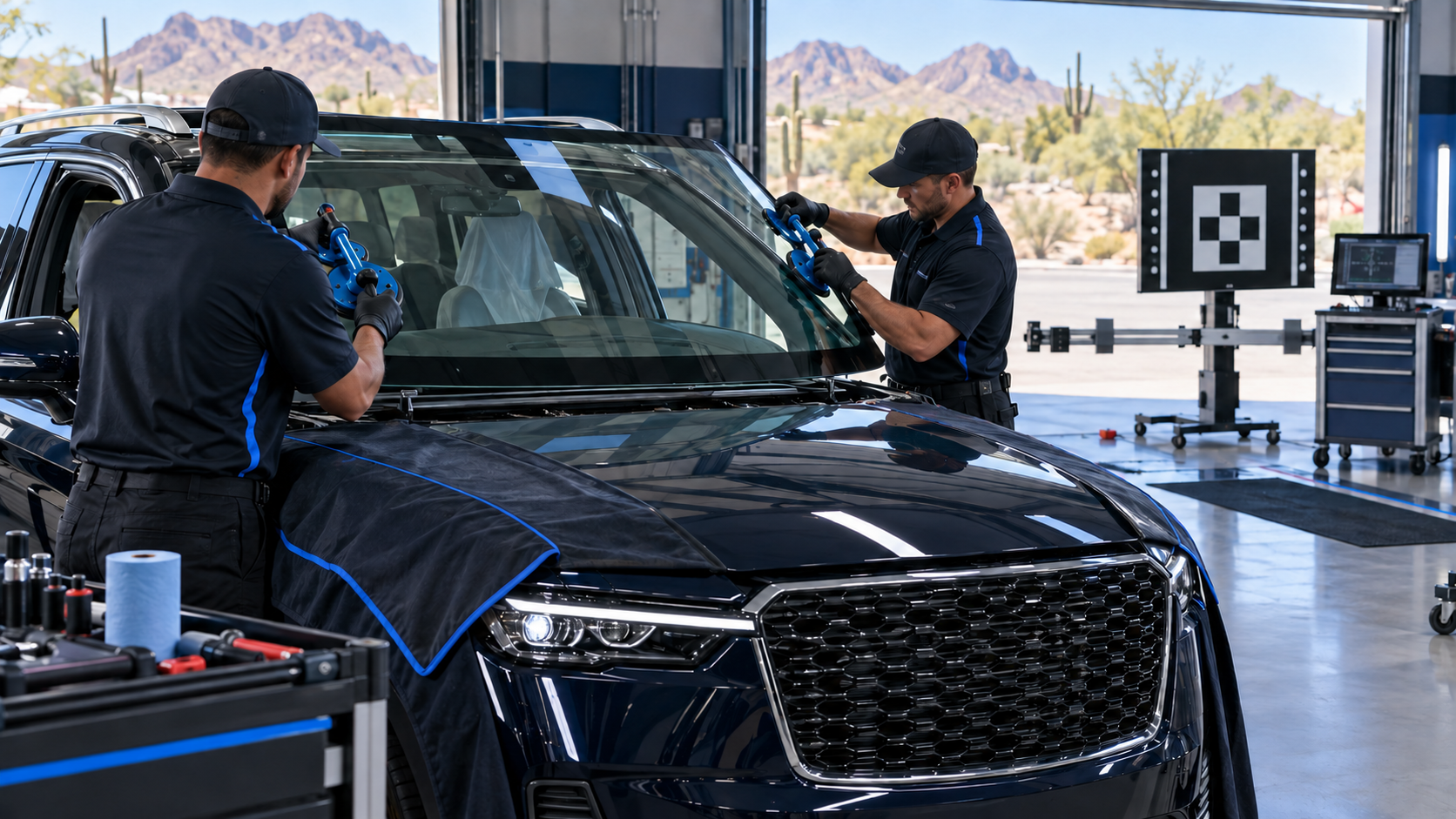
During replacement, the technician protects the vehicle, removes the damaged windshield, prepares the mounting surface, and installs the new glass with the appropriate adhesive system.
After installation, the adhesive needs time to reach the strength required for safe driving. This is called safe drive-away time. You may also see retention tape around the windshield — leave it in place for the amount of time the technician recommends.
Step 6: Complete ADAS Calibration and Final Checks
Many newer vehicles use a forward-facing camera mounted near the windshield to support advanced driver assistance systems (ADAS). Depending on the vehicle, those systems may include lane departure warnings, forward collision alerts, automatic emergency braking, traffic sign recognition, or adaptive cruise control.
Replacing the windshield can change the camera's relationship to the road, even when the new glass appears perfectly positioned. When the manufacturer requires calibration, that procedure is part of completing the repair, not an optional upgrade.
What Should You Have Ready When You Call?
- The vehicle year, make, model, and VIN
- A description of the chip, crack, or broken glass
- Photos of the damage when available
- Your insurance carrier and policy information
- Any visible cameras, sensors, warning lights, or head-up display features
- The address and conditions at the preferred mobile-service location
Why the Right Auto Glass Company Matters
Windshield replacement is no longer simply a matter of exchanging one piece of glass for another. The correct part, professional installation, adhesive cure time, insurance authorization, and vehicle technology all have to work together.
At ProView Auto Glass & Tint, we help Arizona drivers understand the process before the work begins. From insurance questions and mobile service to windshield installation and ADAS calibration, our goal is to make every step clear, convenient, and technically complete.
Frequently Asked Questions
How long does windshield replacement take?
The installation itself may be completed within a typical appointment window, but the total time depends on the vehicle, glass, weather, adhesive cure requirements, and whether ADAS calibration is needed.
Can windshield replacement be completed at my home or workplace?
Often, yes. Mobile service requires a safe, suitable work area and acceptable weather conditions.
Does every vehicle need ADAS calibration after windshield replacement?
No. Calibration depends on the vehicle and the systems associated with the windshield. When the manufacturer requires it, calibration should be completed as part of the replacement process.
Will insurance always pay for windshield replacement?
No. Coverage depends on the policy, deductible, cause of damage, selected endorsements, and insurer authorization. Review the specific policy or visit our insurance claims page.