You are driving across the Valley with the air conditioning running, but the sunlight coming through your side window still feels intense. Your arm is warm, the passenger beside you keeps shifting out of the sun, and you find yourself wondering how much protection that glass actually provides.
Your windshield and side windows do not necessarily handle sunlight the same way. Understanding that difference can help you choose window tint for more than its appearance.
Your windshield and side windows may offer different UV protection
Most modern windshields use laminated glass, which includes an interlayer between sheets of glass. That construction generally provides strong ultraviolet protection. Side-window construction varies, and many vehicles use tempered glass that can allow more UVA radiation through.
Some vehicles have laminated side windows or glass with additional UV-filtering properties. That means the answer depends on your vehicle, not simply on whether the windows look clear or dark.
The Skin Cancer Foundation explains how automotive glass and UV-blocking film differ. Window film can complement other sun-protection habits, including sunscreen and protective clothing. It does not replace them.
Choose tint for performance as well as appearance
When shopping for tint, it is easy to start with one question: How dark should it be?
Shade affects appearance, privacy, and how much visible light enters the cabin. It does not fully describe how a film handles heat or ultraviolet radiation.
High-quality ceramic window film is engineered to reject infrared heat and block UV radiation. A lighter ceramic film can often outperform a darker basic film when it comes to both heat rejection and UV protection. Choosing by shade alone may leave performance on the table.
Heat rejection affects more than comfort
Solar heat entering through side windows warms the cabin, raises the load on the air conditioning system, and reaches passengers directly. On a warm Arizona afternoon, the difference between treated and untreated side glass can be felt immediately.
Quality ceramic tint reduces the amount of infrared energy passing through the glass before it becomes heat inside the vehicle. That means a cooler cabin from the moment you get in, less strain on the climate control system, and a more consistent temperature across the front and rear seats.
Interior protection over time
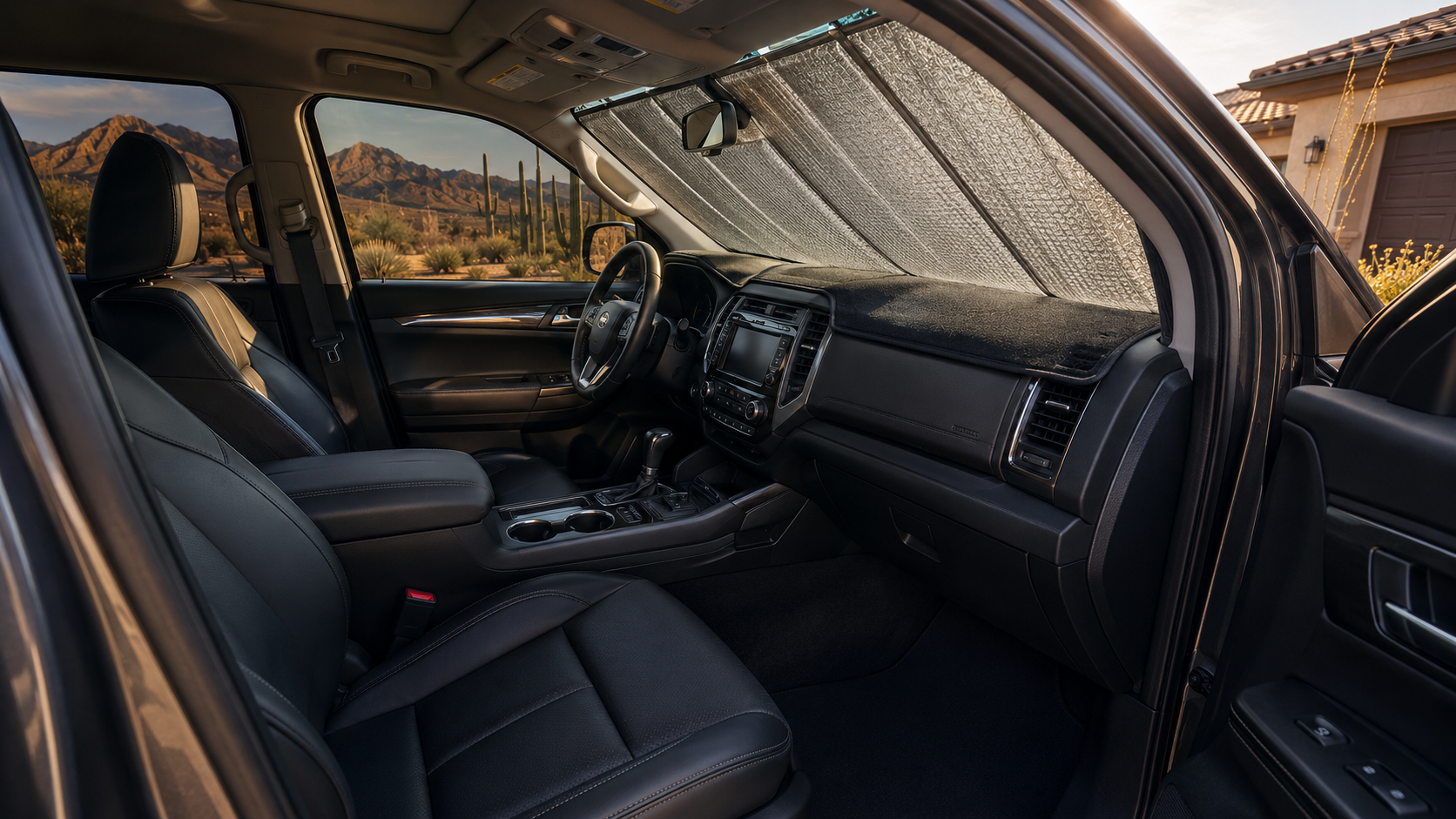
UV exposure and heat contribute to fading, cracking, and premature aging of interior surfaces. Dashboards, leather seats, door panels, and trim can all show the effects of years of direct sun exposure through untreated side glass.
Window film that blocks UV radiation helps slow that process. The protection is cumulative — every drive adds up, and treated glass consistently reduces the exposure that reaches interior materials.
Considerations for the whole vehicle
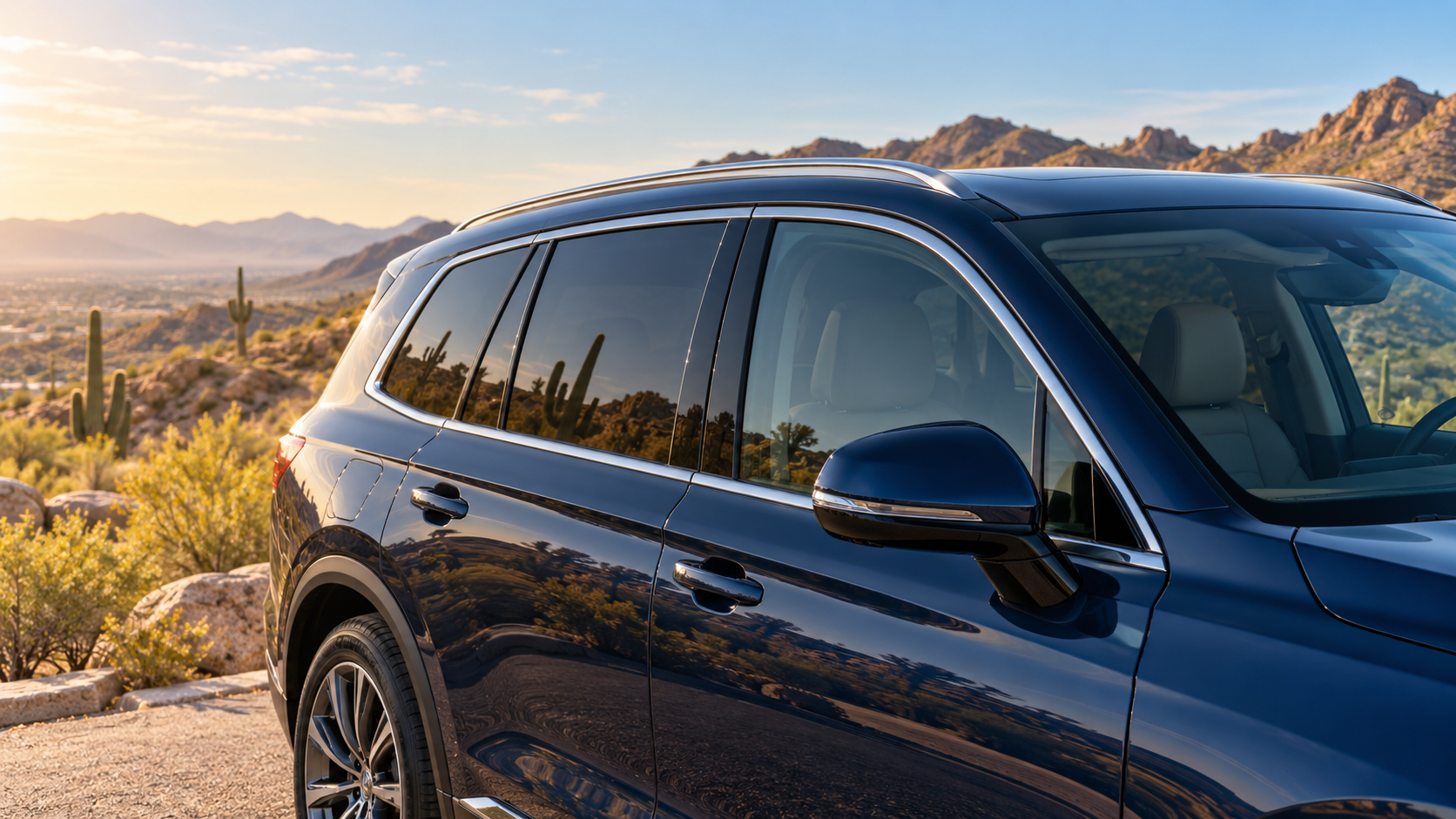
Many SUVs and trucks include factory privacy glass on rear windows. That glass may reduce visible light and provide privacy, but its UV and heat performance varies. A professional installer can measure what the existing glass provides and recommend whether added film would help meet your goals.
Front side windows, which often have no factory tint and face direct sun during a typical commute, may be the area where window film makes the most noticeable difference for the driver.
Arizona driving conditions make the difference more apparent
Intense sun, long commutes, and months of high temperatures mean Arizona drivers accumulate significant UV and heat exposure through side windows over time. The gap between what a windshield provides and what untreated side glass allows becomes more relevant the more time you spend on the road.
At ProView Auto Glass & Tint, we help drivers throughout Scottsdale, Paradise Valley, Phoenix, Mesa, Gilbert, Chandler, Tempe, and surrounding communities evaluate their options and choose window film based on performance, legality, and how they actually use their vehicles.
Frequently Asked Questions
Do side windows block UV rays?
It depends on the vehicle. Most windshields use laminated glass that provides strong UV protection. Side windows often use tempered glass that may allow more UVA radiation through. Added window film can provide UV blocking across treated side glass.
Does darker tint provide more UV protection?
Not necessarily. UV protection depends on the film's construction, not its shade. A high-quality ceramic film can provide strong UV blocking at lighter shades.
Can window tint protect car interiors from fading?
Yes. UV radiation and heat contribute to fading and aging of interior surfaces. Window film that blocks UV radiation helps reduce that exposure over time.
Is factory privacy glass the same as performance tint?
No. Factory privacy glass reduces visible light but its UV and heat performance varies. Professional window film adds a functional layer that can improve heat rejection and UV protection beyond what factory glass provides.