What Tint Shade Will You Actually Be Happy With? How to Choose Without Guessing
Shopping for window tint can become surprisingly stressful. You start with a simple goal, such as making your car cooler or giving it more privacy, and suddenly you are comparing percentages, film types, legal limits, factory glass, and photos that all seem to look different.
Then comes the question that makes many drivers freeze: How dark should I go?
The good news is that choosing a window tint shade should not feel like a high-pressure guessing game. The right choice depends on how you use your vehicle, how much nighttime visibility you want, the look you prefer, what is already built into your glass, and what Arizona law allows.
What Do Window Tint Percentages Mean?
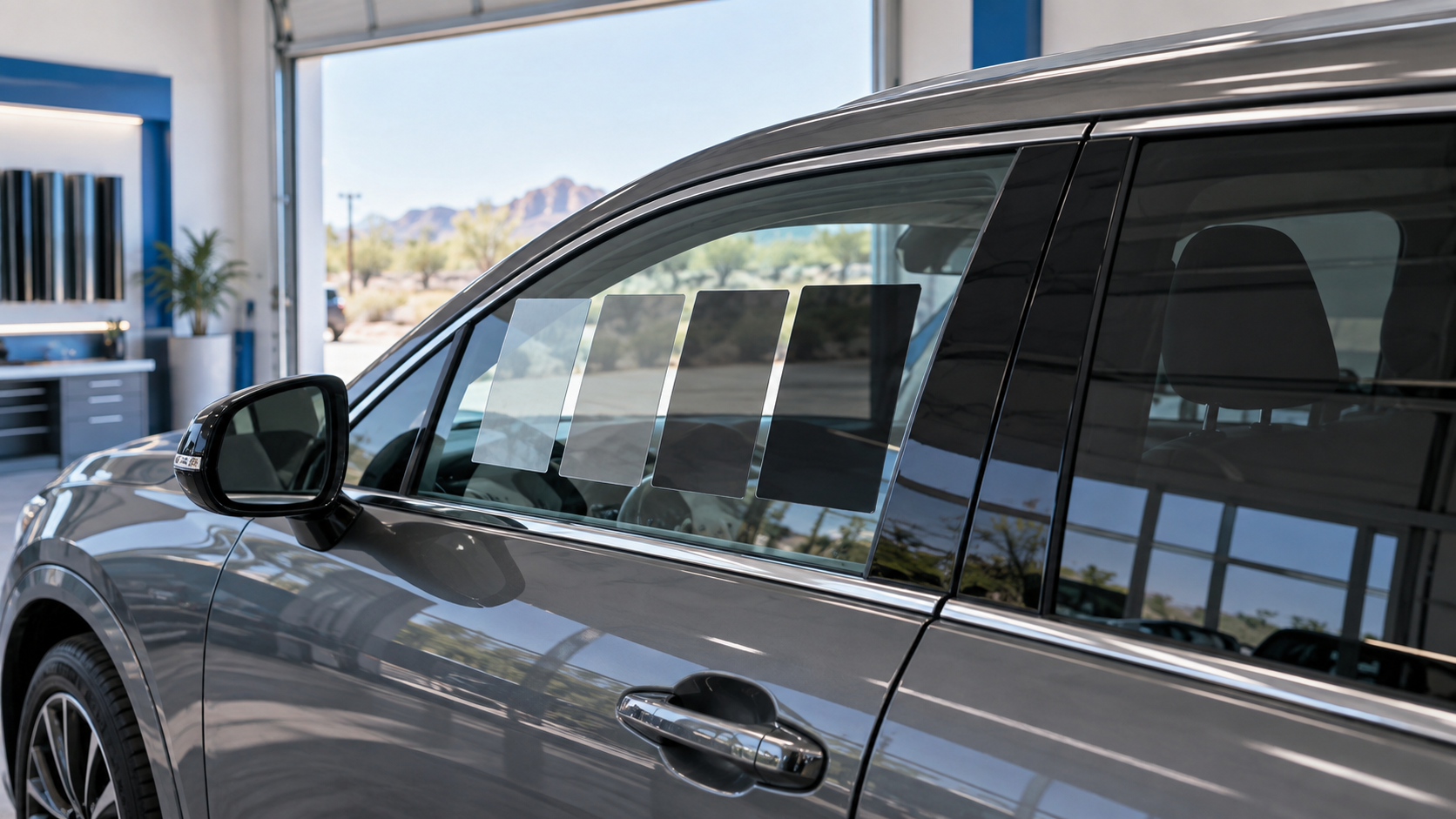
Window tint percentages refer to visible light transmission, usually shortened to VLT. This is the amount of visible light that passes through the film and the vehicle glass together.
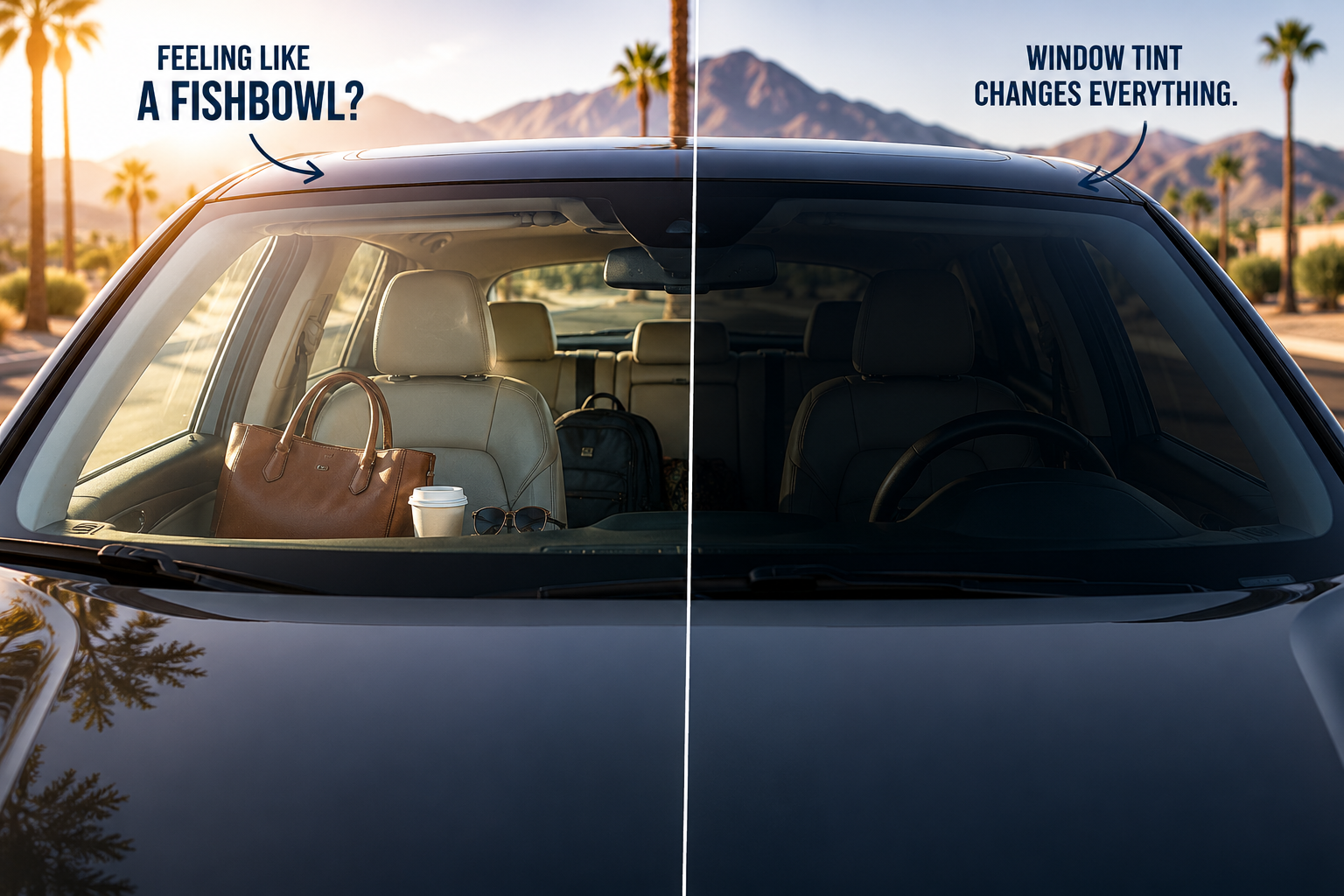
A higher percentage allows more light through and appears lighter. A lower percentage allows less light through and appears darker. The number describes light transmission, not the amount of darkness added. That distinction feels backward at first, which is why it helps to see real samples and discuss the options before installation.
Why the Same Tint Shade Can Look Different on Two Cars
A percentage is useful, but it does not tell the whole story. The same film can look noticeably different from one vehicle to another.
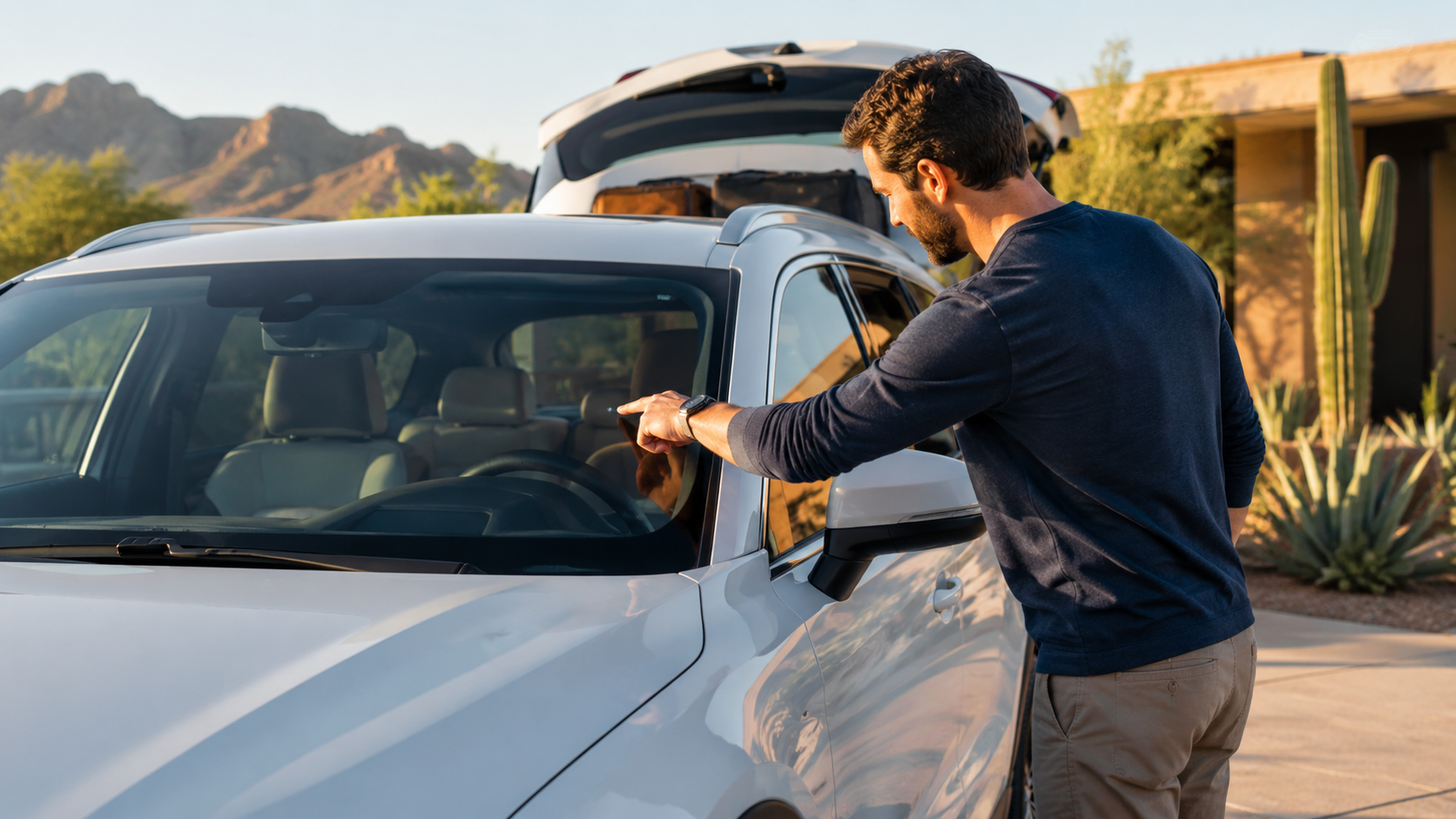
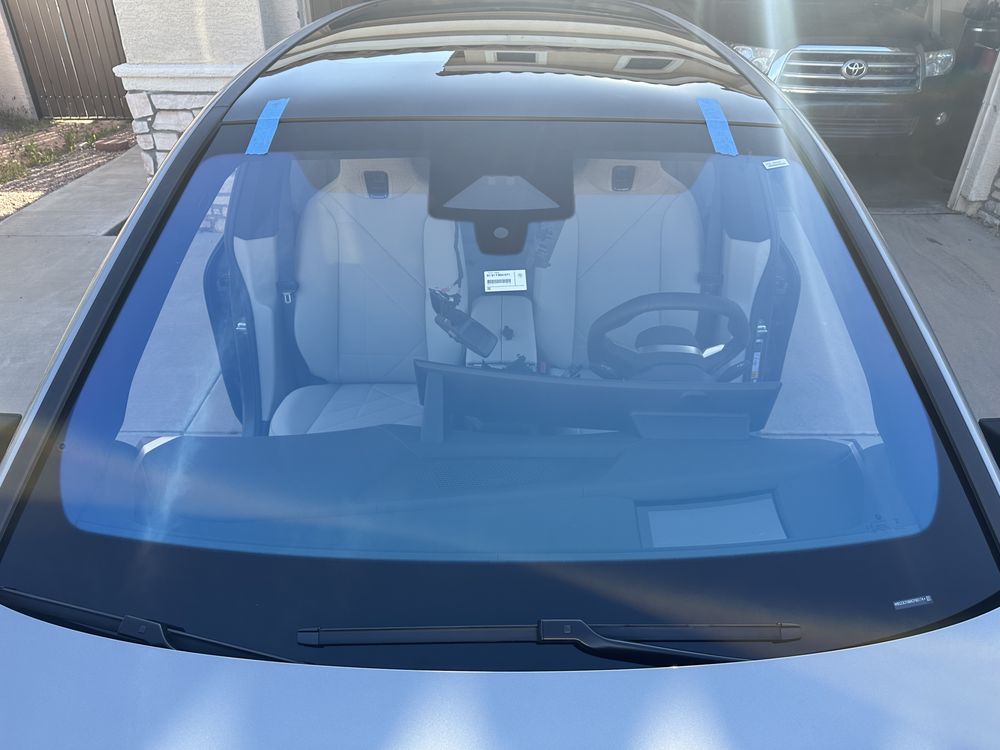
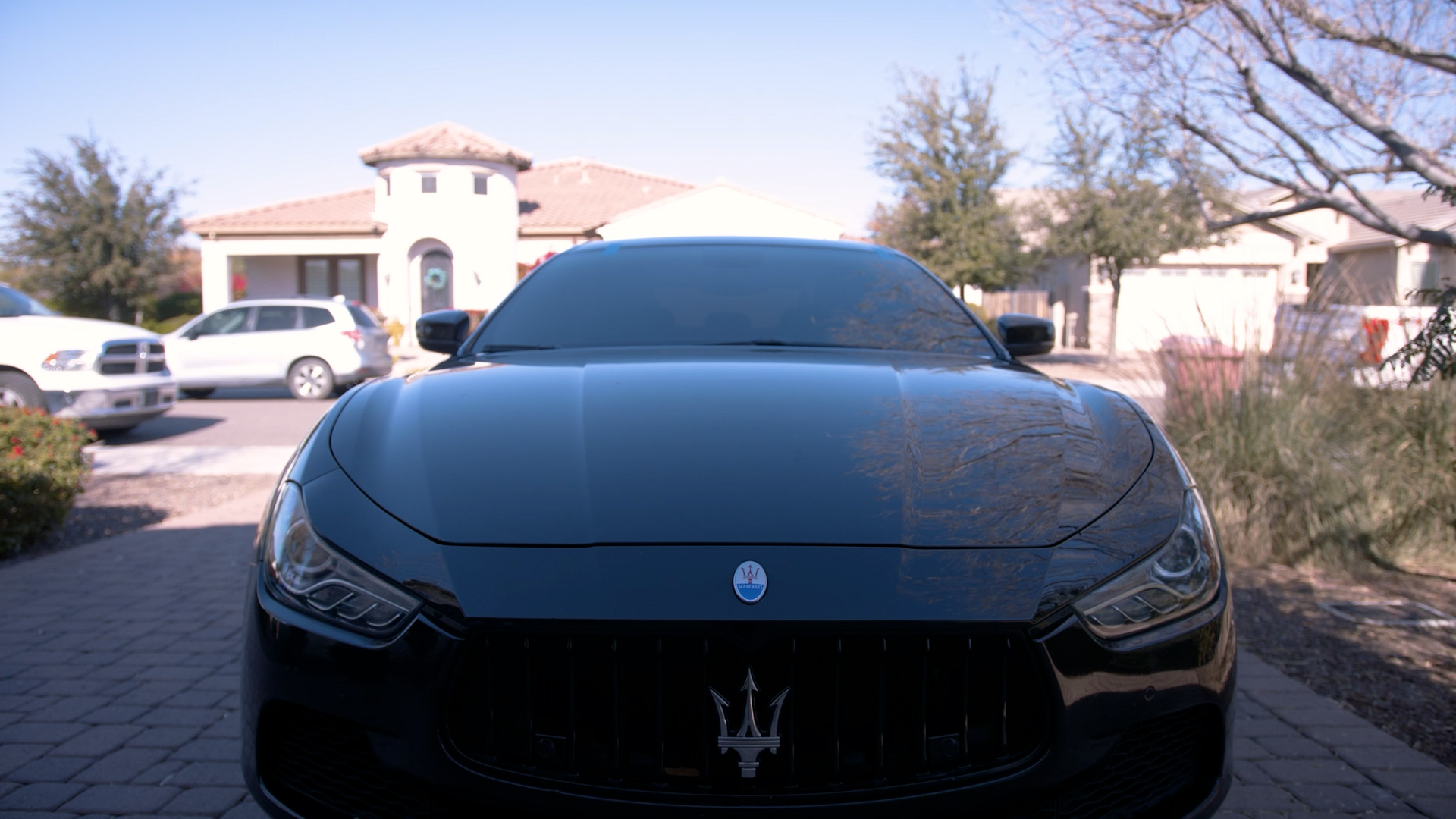
A black or dark interior absorbs more light and can make the windows appear darker from the outside. A tan, gray, or white interior reflects more light and can make the same shade appear lighter. Window size, windshield angle, roof design, sun exposure, and the amount of glass surrounding the cabin also affect the final appearance.
Darker Does Not Automatically Mean Cooler
One of the biggest misconceptions about window tint is that the darkest film must provide the strongest heat protection. Shade and performance are not the same thing.
A basic dark film may reduce visible light without rejecting as much infrared heat as a lighter, high-performance ceramic film. Nano-ceramic tint is engineered to reduce infrared heat and block ultraviolet exposure while maintaining clearer visibility. For Arizona drivers, this distinction matters — the goal is to reduce the heat entering the cabin, protect the interior, improve comfort, and select a shade you will enjoy living with every day.
Think About Nighttime Before Choosing Your Shade
A tint shade that feels perfect at noon can feel very different on an unlit road at night. Dark film reduces visible light in both directions. That can affect how easily you see pedestrians, curbs, bicycles, road edges, and cross traffic when turning or backing up.
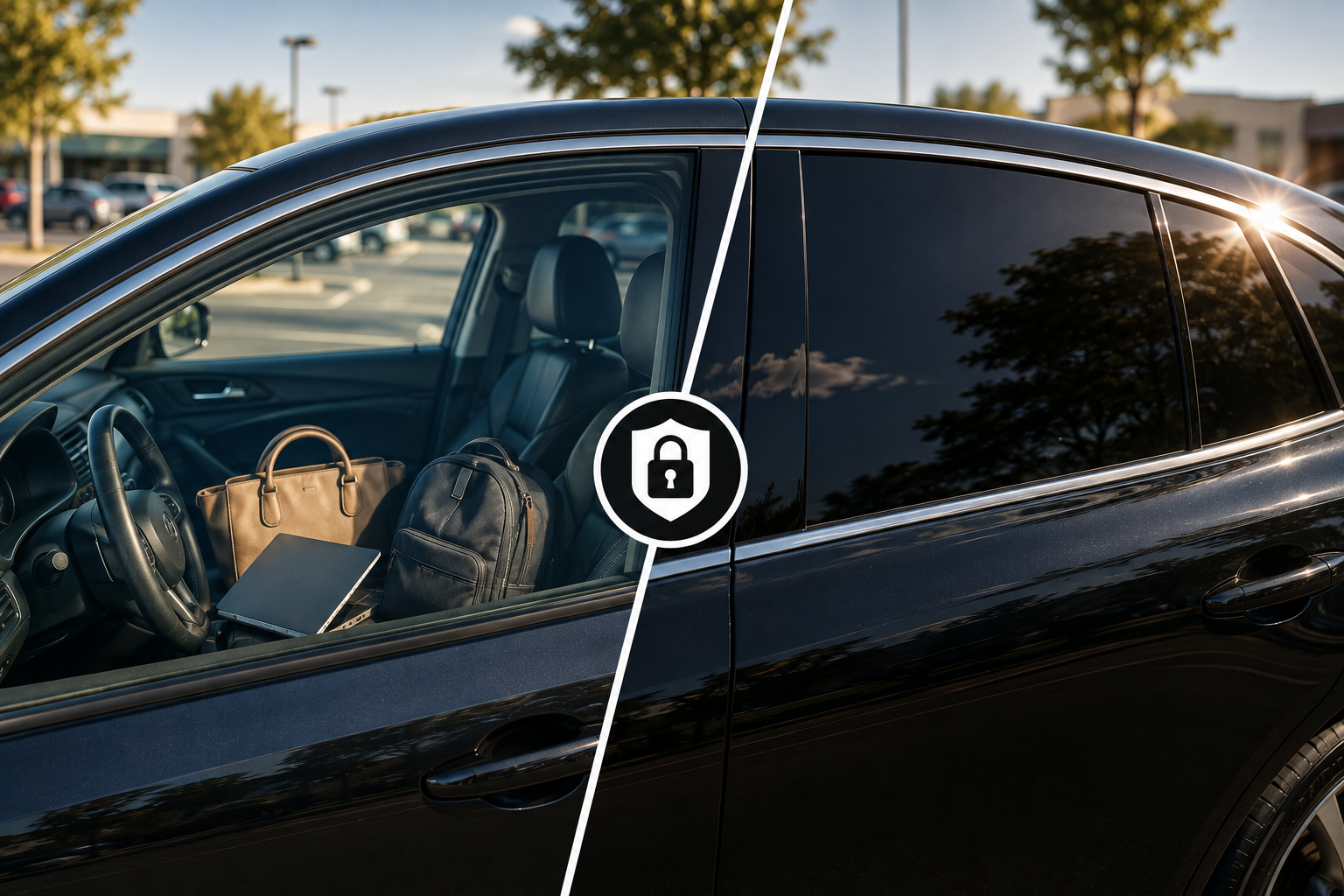
Before selecting a very dark shade, think honestly about when and where you drive. Privacy may be important, but so are confidence and visibility. The best choice balances the appearance you want with the way you actually use your vehicle.
What If Your SUV or Truck Already Has Dark Rear Glass?
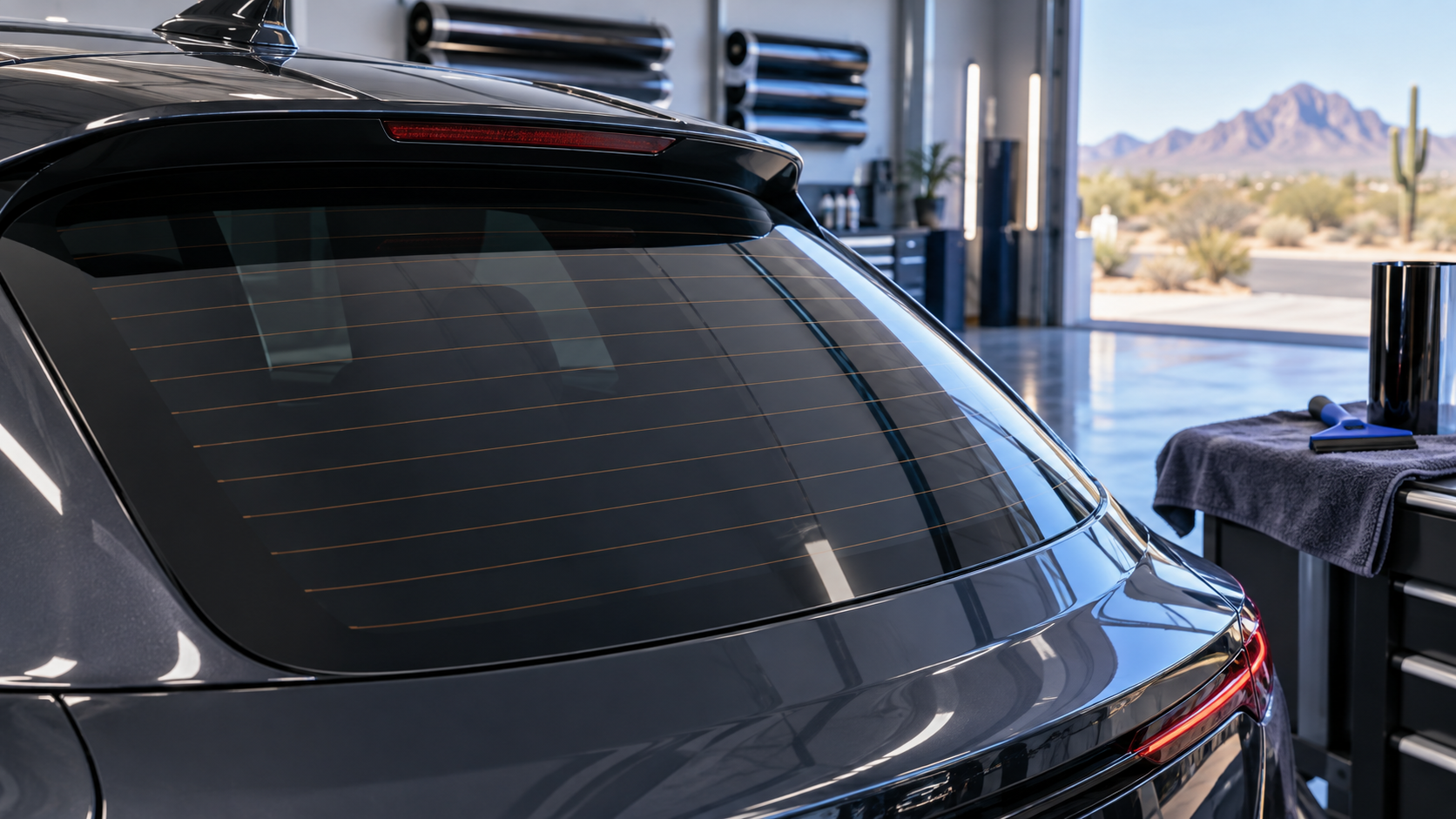
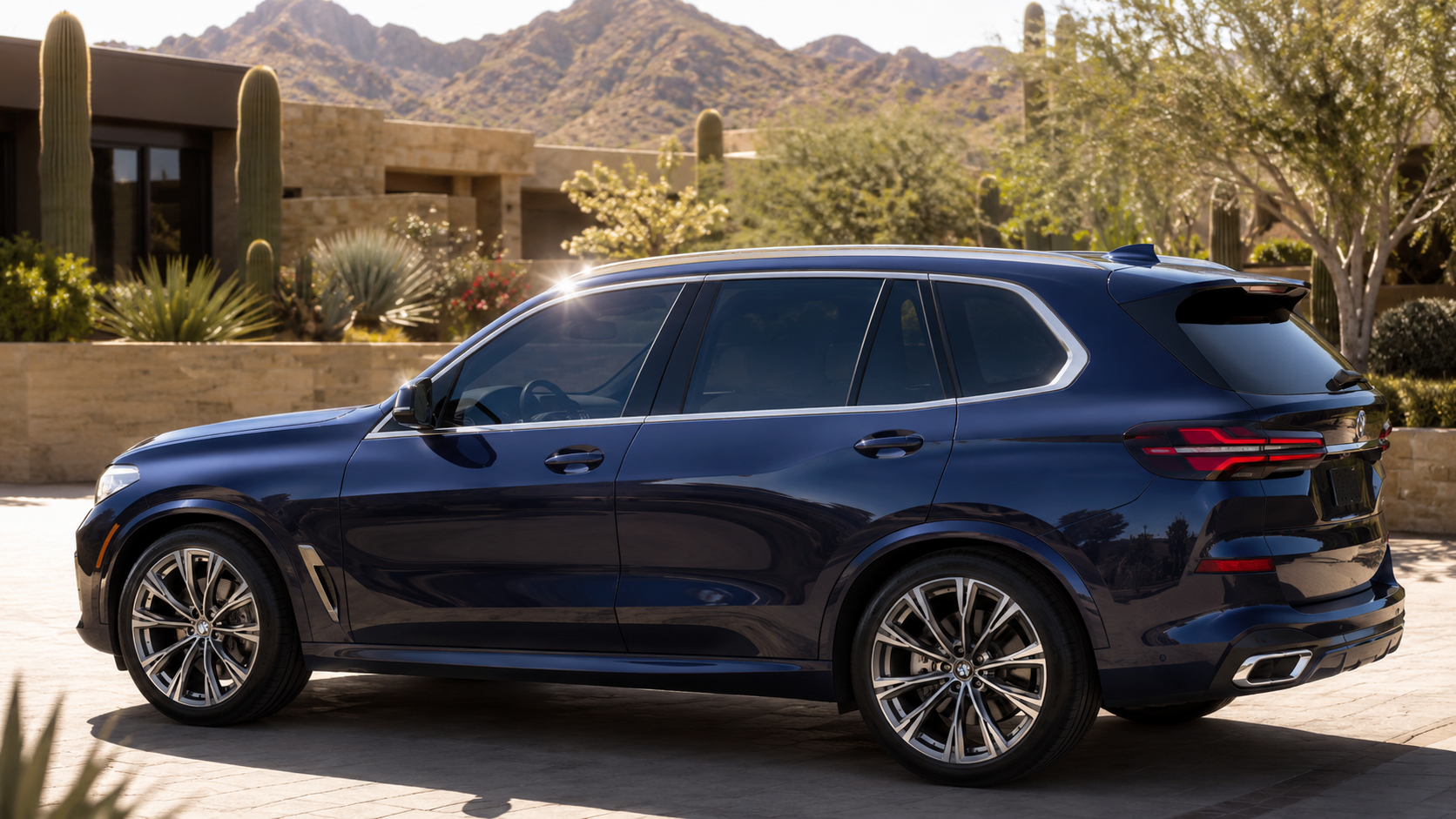
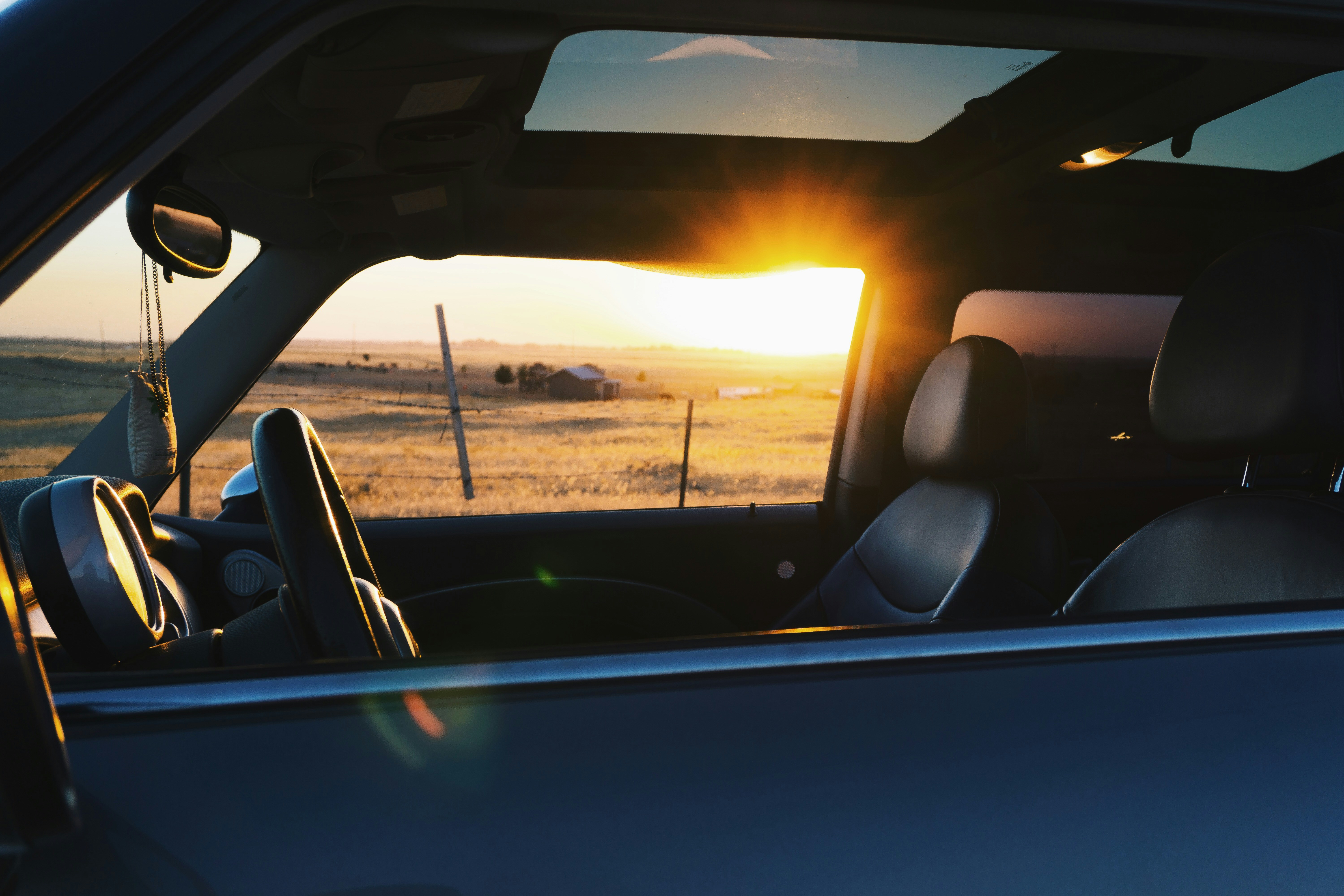
Many SUVs and trucks come from the factory with darkened rear windows. It creates privacy and a darker appearance, but it does not necessarily provide the same infrared heat rejection or UV performance as professionally installed window film.
A tint professional can measure the existing glass and recommend a front shade that creates a more consistent appearance while remaining within legal limits.
What Window Tint Is Legal in Arizona?
Arizona law regulates both light transmission and reflectivity. Front side windows may use tint that allows 33 percent light transmission, plus or minus 3 percent. Windows behind the driver and the rear window have different requirements, and windshield material is restricted to the topmost permitted portion unless another legal exception applies.
Laws and vehicle configurations can be complicated, so drivers should rely on current official guidance and a knowledgeable installer rather than assuming that a shade seen online is legal for every window.
Five Questions That Make the Decision Easier
- Is your main goal heat rejection, privacy, glare reduction, appearance, UV protection, or a combination?
- How often do you drive at night or on poorly lit roads?
- Do you want the front windows to coordinate with existing rear privacy glass?
- Would you prefer a lighter film with strong ceramic performance or a darker overall appearance?
- Are there visibility concerns, medical needs, work requirements, or family drivers to consider?
Choose Tint You Will Appreciate Every Day
The best window tint is not necessarily the darkest shade or the most expensive film. It is the combination that supports your comfort, visibility, privacy, vehicle style, and budget.
ProView helps drivers throughout Tempe, Mesa, Chandler, Gilbert, Scottsdale, Phoenix, and the surrounding Valley compare their options without pressure. Our team will explain the differences, answer your questions, and help you choose window tint you will feel good about long after the appointment is over.
Frequently Asked Questions
Is 20 percent tint darker than 35 percent tint?
Yes. Tint percentages describe visible light transmission. A 20 percent result allows less visible light through and appears darker than a 35 percent result.
Does darker tint reject more heat?
Not necessarily. Heat rejection depends heavily on the film technology. A lighter ceramic film may reject more infrared heat than a darker basic film.
Will window tint make it harder to see at night?
Darker tint reduces visible light and can affect low-light visibility. Drivers who travel frequently at night should discuss their routes, comfort, and visibility needs before choosing a shade.
What tint percentage is legal on Arizona front side windows?
Arizona law permits front side window tint with 33 percent light transmission, plus or minus 3 percent, subject to the statute's other requirements. Because the result includes both the glass and film, professional measurement is important.