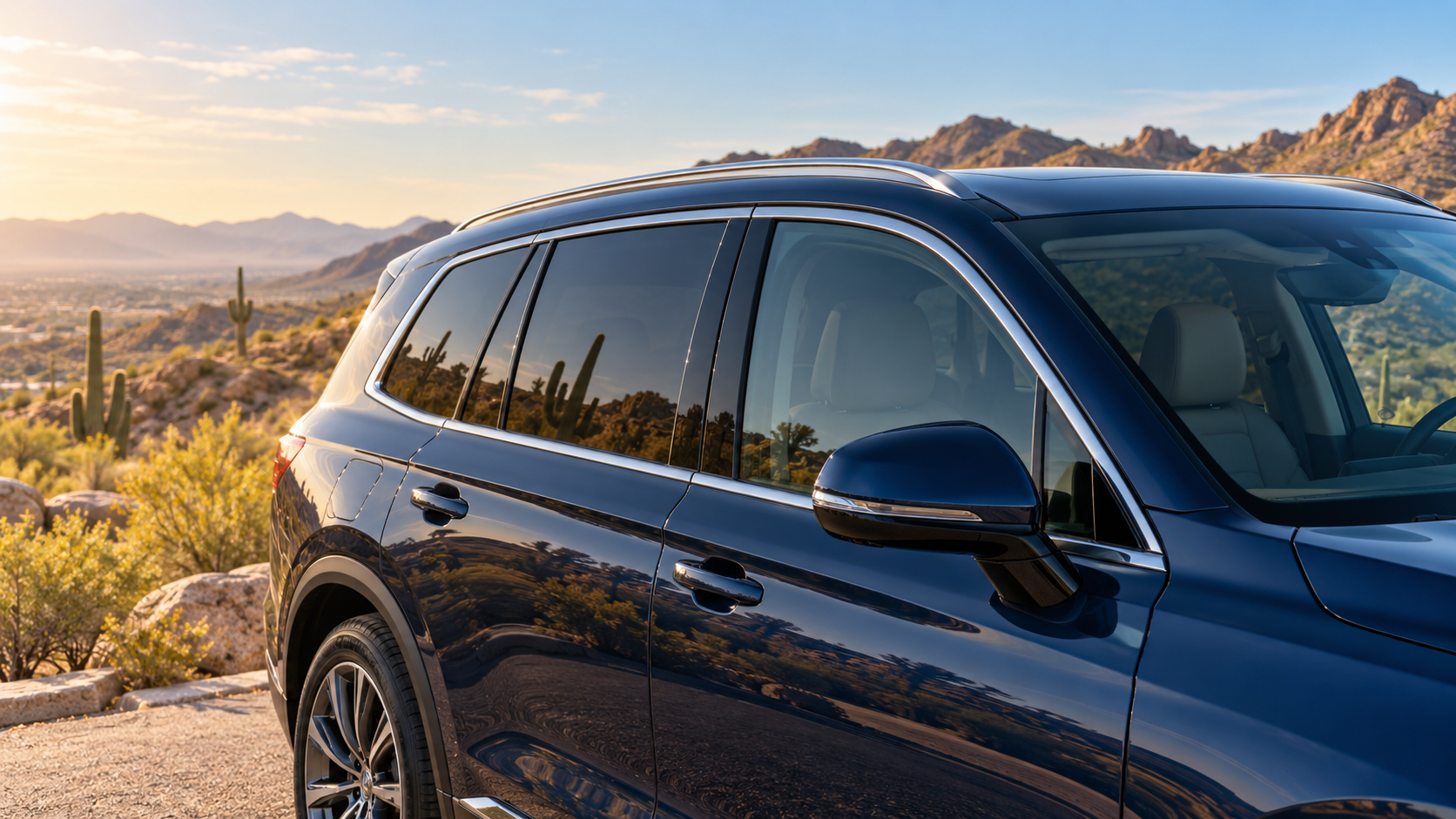
You like your vehicle’s windows the way they are. Maybe you prefer the original factory appearance, enjoy an open, airy cabin, or simply don’t want dark tint.
But when the Arizona sun starts pouring through the glass, a little extra protection sounds pretty appealing.
Fortunately, darker windows aren’t the only option. Clear or nearly clear nano-ceramic window film can help reduce incoming solar heat and ultraviolet exposure without creating the dark appearance many people associate with tint.
Window Film Doesn’t Have to Look Dark
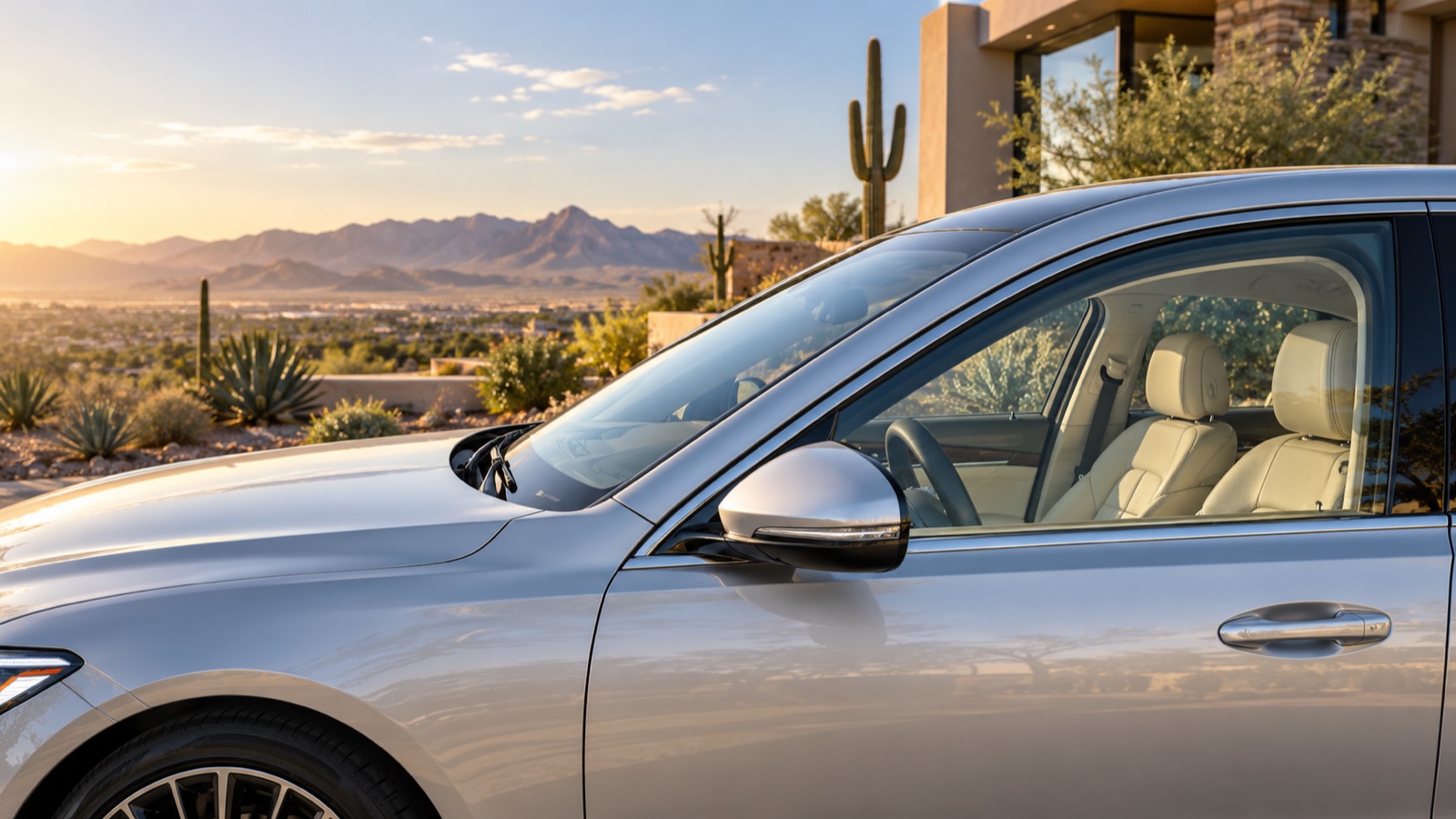
The word “tint” often brings to mind deep charcoal windows and added privacy. Ceramic film offers another possibility: performance with a much lighter appearance.
Certain clear ceramic films are designed to let substantial visible light through while reducing solar heat and UV transmission. The exact results depend on the film and the glass it is installed on. Manufacturer performance data shows that nearly clear films can still provide meaningful heat rejection. [1]
That makes this an option worth discussing if you’ve been interested in ProView’s window tinting services but assumed you would need to change your vehicle’s appearance dramatically.
A Subtle Upgrade for Sunny Arizona Drives
Think about an afternoon commute with sunlight landing directly on your arm, or a passenger seat that gets the full force of the sun.
Clear ceramic film can help reduce the solar heat entering through treated glass, making those sunny drives more comfortable. It also offers UV protection while keeping the windows looking relatively light. For example, LLumar’s AIR clear film lists more than 99% UV blocking, although performance claims should always be matched to the specific product being installed. [2]
The goal is a more comfortable driving experience with a subtle visual change. Ask to see a sample on glass so you can judge the appearance for yourself.
“Clear” Doesn’t Mean Every Film Looks Identical
Clear and nearly clear are useful descriptions, but they don’t mean every product is completely invisible.
Films vary in visible light transmission, color, and reflectivity. Your existing glass also affects the finished appearance. A product that looks almost undetectable on one window may have a slightly different appearance on another.
Tell your installer what matters most to you. Is it keeping a factory look? Maintaining a bright cabin? Reducing the heat you feel during your commute? Those priorities help guide the conversation beyond simply choosing a shade.
Does Ceramic Film Strengthen the Glass?
This is where it helps to be specific about the kind of protection you want.
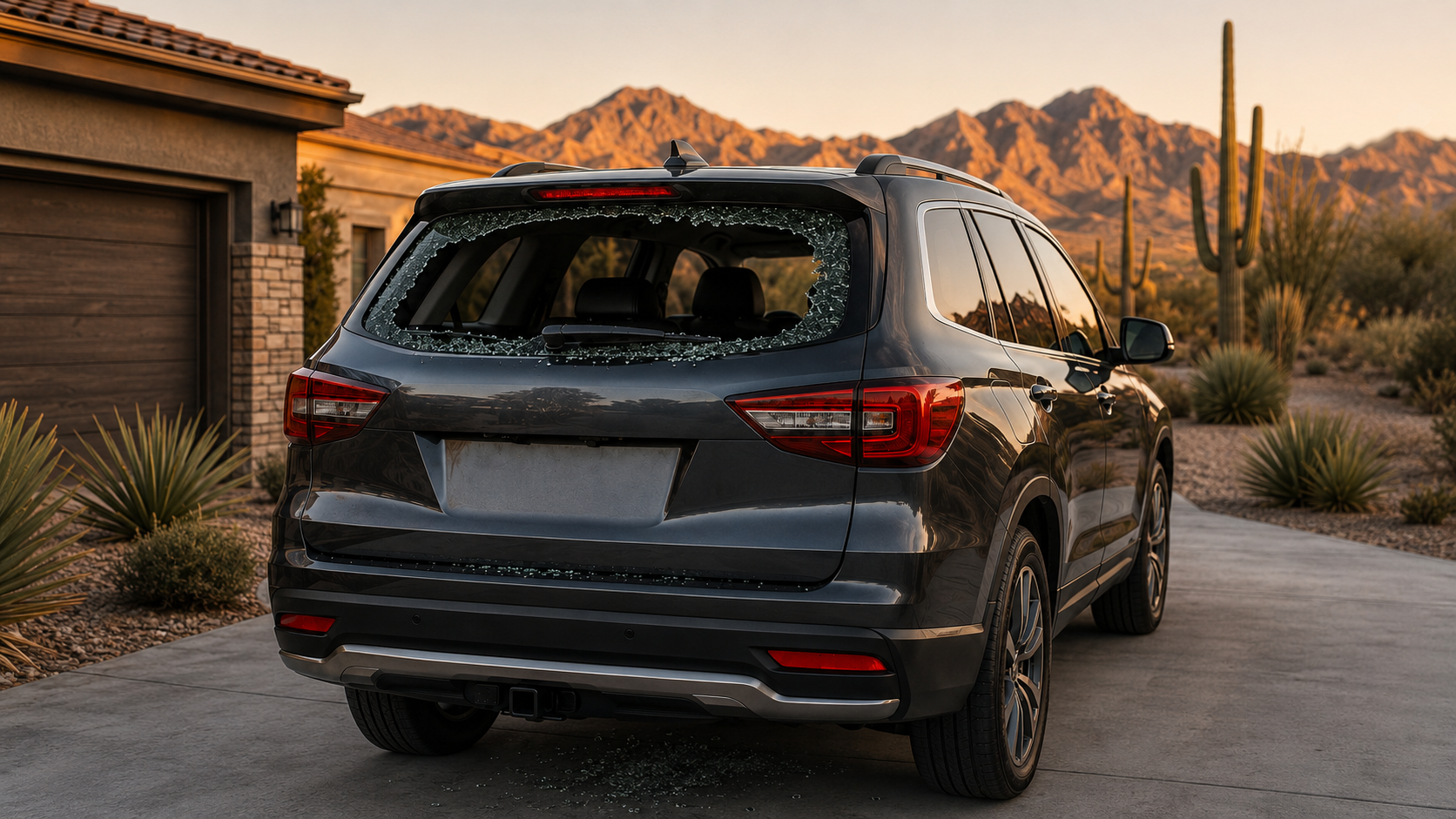
Solar-control ceramic film should not automatically be described as strengthening glass or preventing chips and cracks. Some manufacturers describe glass-fragment retention benefits for particular films, but that is different from making the glass resistant to breaking. Dedicated safety and security films are a separate product category with their own specifications. [2, 3]
If rock impacts or broken-glass protection are your main concern, bring that up before choosing a film. Ask what the exact product is designed and tested to do.
Start With the Look You Want
You don’t need to arrive knowing film terminology or product numbers. Start with a simple explanation: “I want protection from the sun, but I don’t want dark windows.”
At ProView Auto Glass & Tint, the team can discuss your preferences and help you compare tint options. Ask about available clear or nearly clear ceramic films, their specifications, and which windows are appropriate for installation.
Request a tint consultation and find out what fits your vehicle and the way you want it to look.
Frequently Asked Questions
Can I get ceramic window film without a dark appearance?
Yes. Clear and nearly clear ceramic films are available. They offer a lighter appearance than traditional dark tint, although the finished look depends on the film and your existing glass. Ask your installer to show you a sample.
Will clear ceramic film provide privacy?
A nearly clear film is intended to preserve visibility and appearance, so it should not be chosen for substantial privacy. If privacy is also a priority, discuss that separately when comparing shades.
Does clear ceramic film prevent rock chips?
Do not assume it does. Heat and UV protection specifications do not establish rock-impact protection. Ask about the exact product’s intended use and testing before relying on any glass-protection claim.
How do I choose the right clear film?
Explain your priorities and ask for the product’s visible light transmission, UV protection, and solar heat performance information. Confirm the film’s suitability for your vehicle and the windows you want treated.