Why Did My RV Windshield Crack Without Being Hit? Understanding Stress Cracks, Frame Flex and Other Hidden Causes
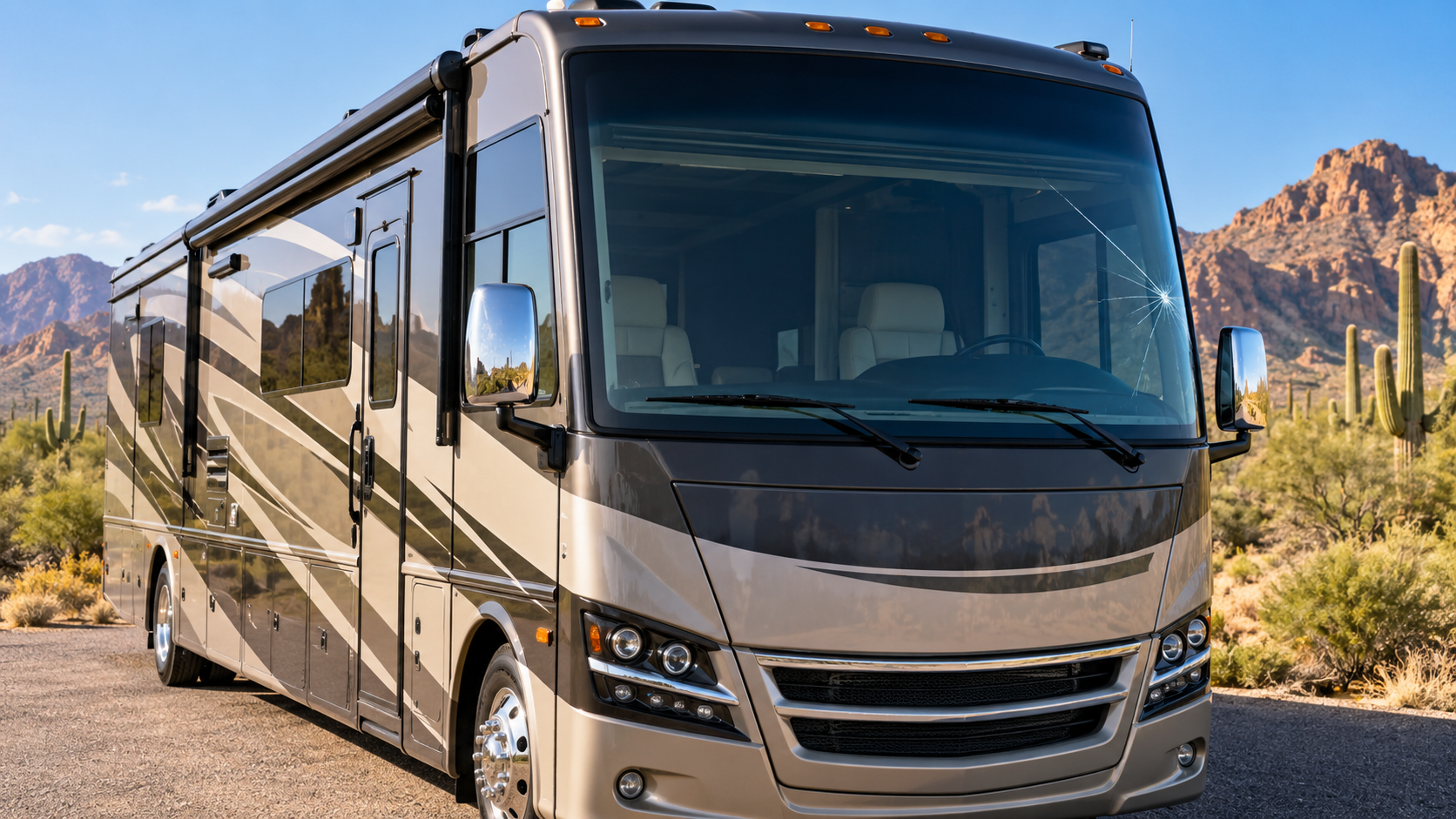
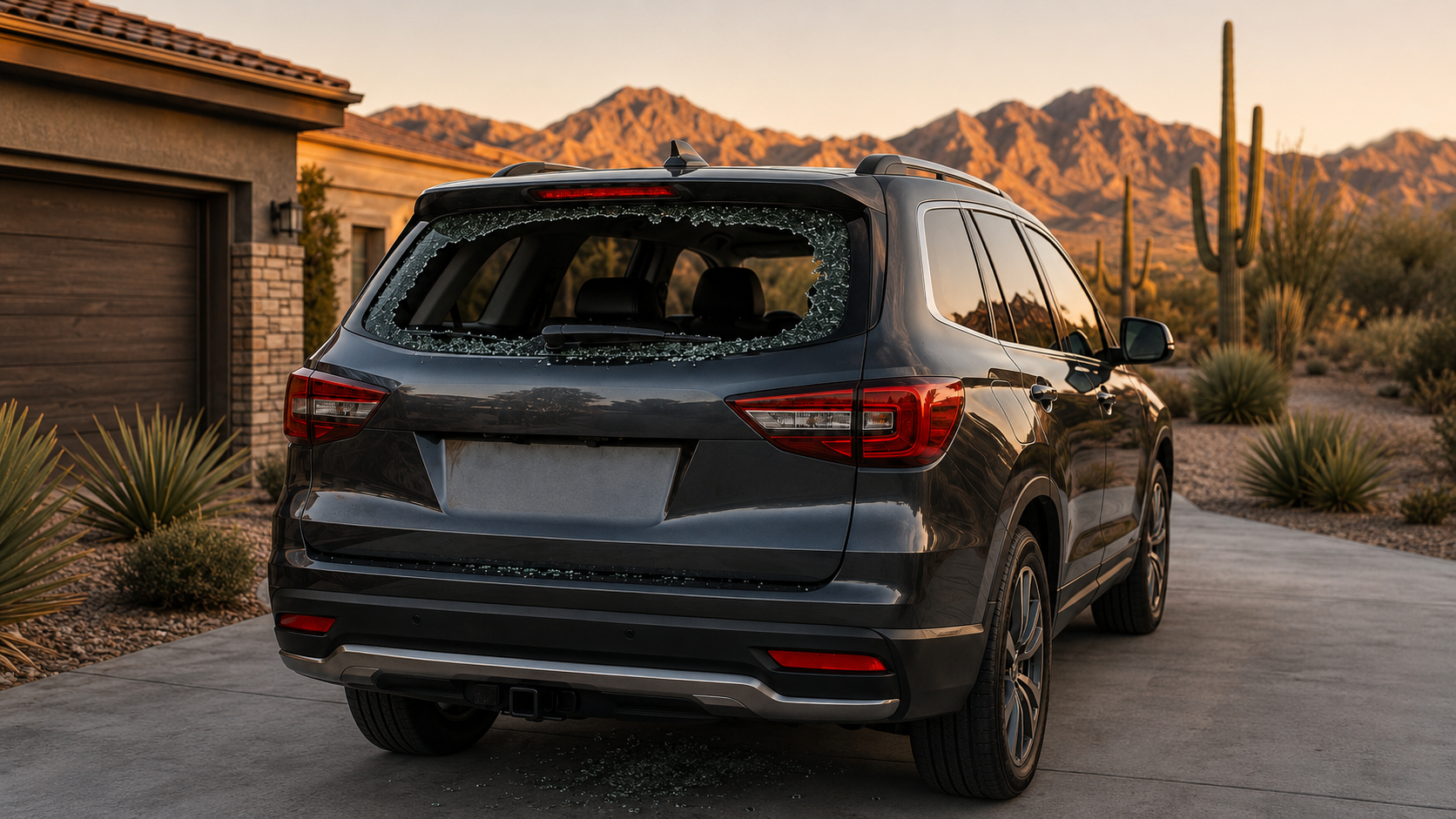
You walk out to your RV and notice a crack spreading across the windshield. There is no obvious rock chip, no impact mark and no memory of anything hitting the glass.
So what happened?
Unlike most passenger vehicles, an RV can place considerable stress on its windshield as the coach moves, twists and responds to changing road and temperature conditions. In some cases, the windshield can crack even when nothing strikes it.
The important question is not simply how to replace the glass. It is why the crack happened in the first place.
Impact Cracks and Stress Cracks Look Different
A typical impact crack begins with a visible chip or pit where a rock or piece of road debris struck the windshield. Small lines may radiate outward from that point.
A stress crack often begins at the edge or corner of the windshield without a clear impact point. It may travel inward in a relatively smooth line and seem to appear overnight or after the RV has been driven, parked or leveled.
Finding the starting point of the crack can help an experienced technician determine whether the damage came from an impact or from pressure placed on the glass.
RV Bodies Move More Than Most Drivers Realize
An RV may feel solid when you are sitting inside it, but its body and chassis experience movement as it travels.
Uneven roads, driveway transitions, potholes and changes in elevation can cause the coach to flex. That movement may transfer pressure to the windshield opening, particularly on larger motorhomes with expansive pieces of glass.
The windshield needs to remain secure while still accommodating the normal movement of the coach. If too much pressure is concentrated in one area, the glass may develop a crack along an edge or corner.
This is one reason an RV windshield should not be treated like an oversized passenger-car windshield. The size of the glass, the shape of the coach and the construction surrounding the opening all matter.
Can Leveling an RV Affect the Windshield?
In certain RVs, uneven leveling can contribute to body flex.
If one section of the coach is lifted or supported differently from the others, the body may twist slightly. That movement may not be visible, but it can place additional pressure around a large windshield.
This does not mean using your leveling system will automatically crack the glass. However, leveling on severely uneven ground or repeatedly placing the body under uneven strain may contribute to an existing problem.
Arizona Temperature Changes Can Add More Pressure
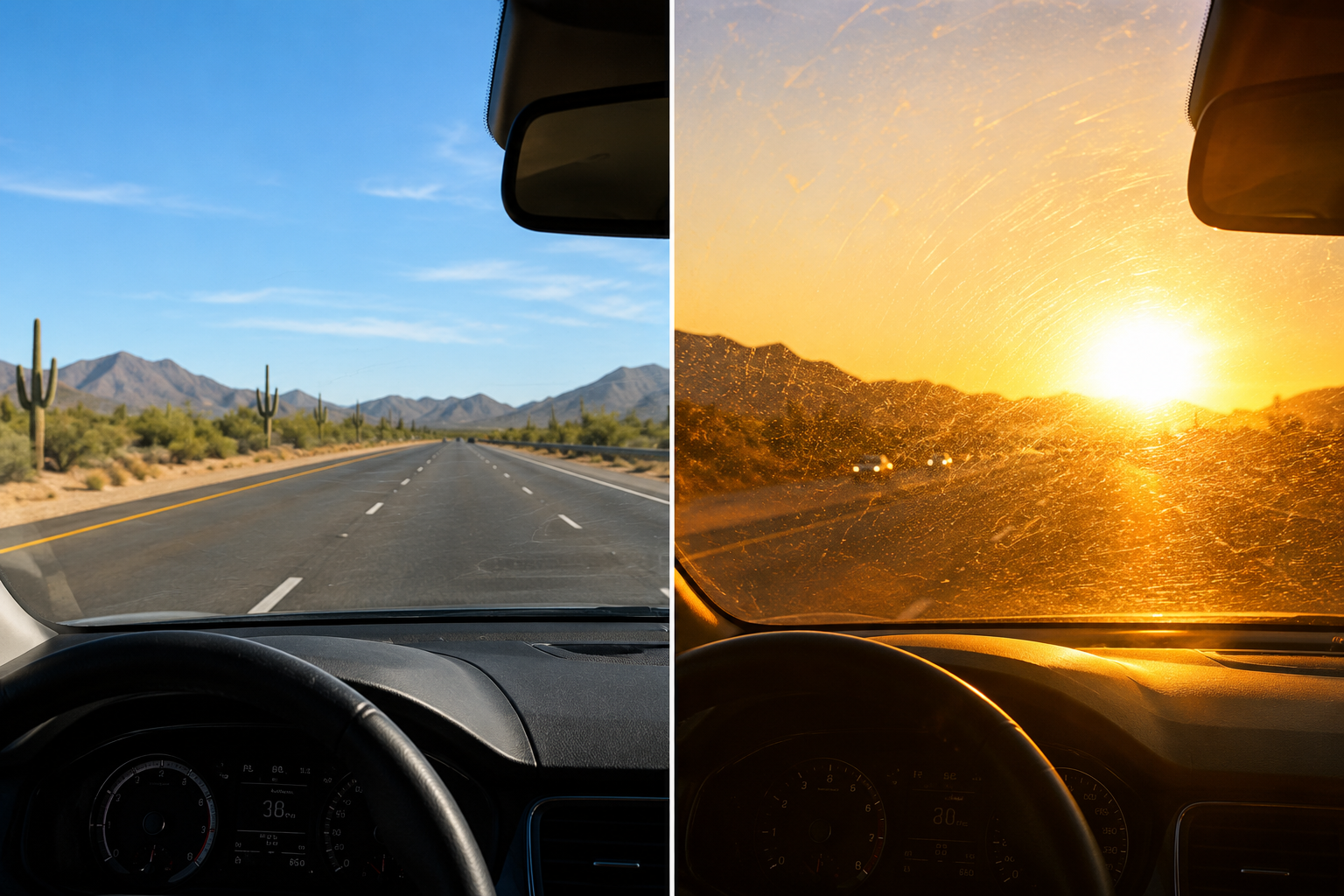
Arizona heat creates another challenge for RV windshields.
A large windshield may sit in direct sunlight for hours while part of the glass remains shaded by the coach, a cover or the surrounding structure. One section can become considerably hotter than another.
Glass expands as it heats and contracts as it cools. When temperature changes happen unevenly across such a large surface, internal stress can increase.
A small chip, weakened edge or existing pressure point may then develop into a larger crack. The crack may appear after the RV has been parked, after the air conditioning is turned on or when temperatures change between day and night.
The Windshield Installation Matters
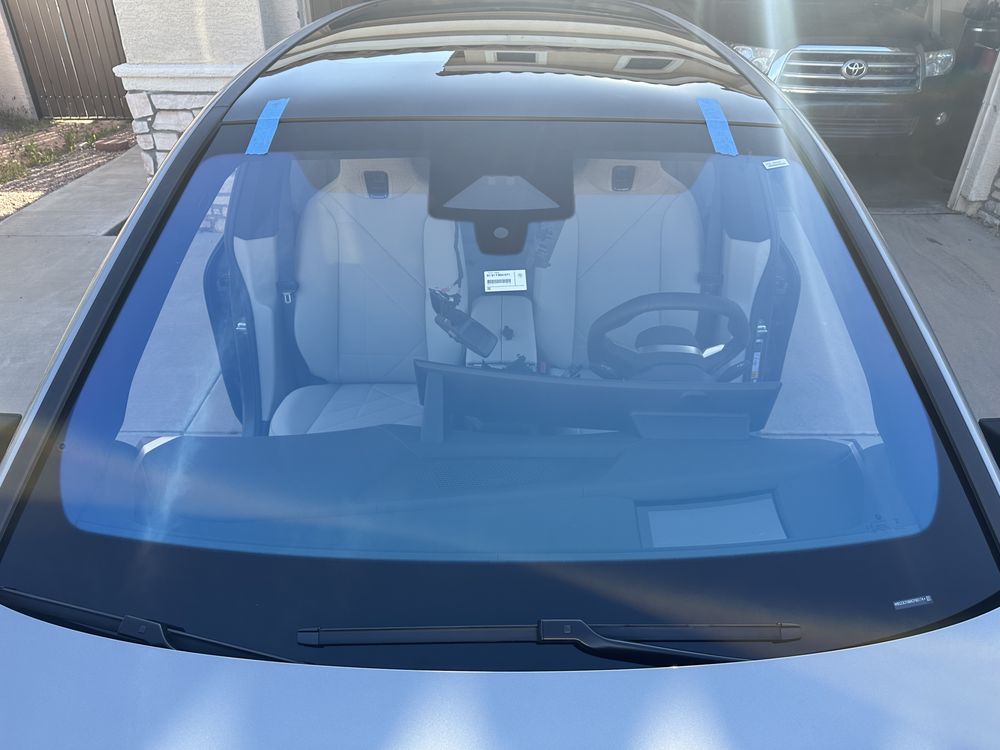
A replacement RV windshield must fit correctly within the opening. The glass should not be forced into place or allowed to rest against a hard pressure point.
Depending on the RV, the windshield may be installed with automotive urethane, a gasket system or another vehicle-specific method. The correct glass, adhesive, trim and installation process all matter.
If the glass is seated unevenly or placed under constant pressure, normal body movement can eventually cause it to crack. A windshield that repeatedly cracks in the same corner may be pointing to a fit, installation or structural concern rather than simple bad luck.
What If Water Is Getting Around the Windshield?
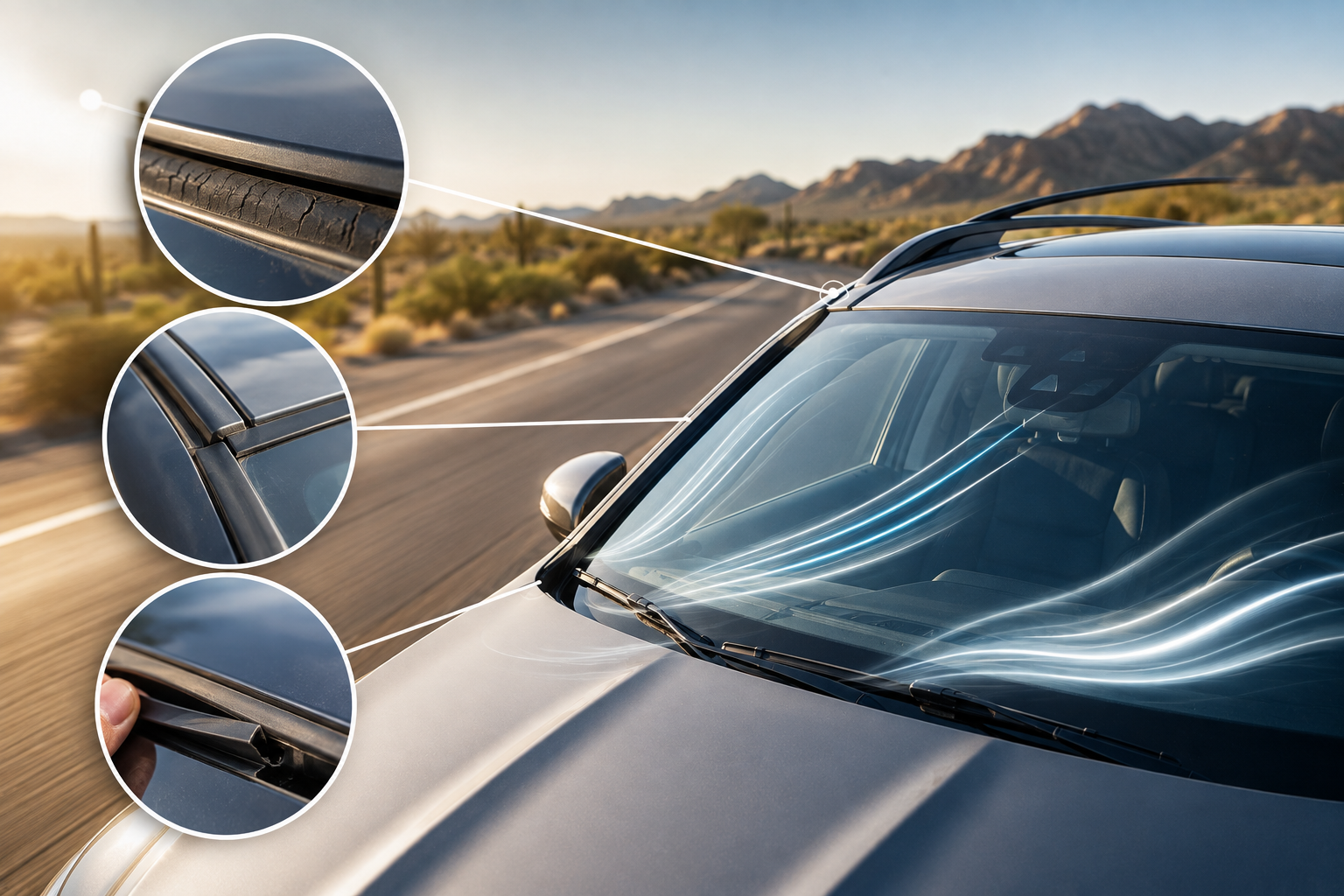
Cracked, hardened or failing seals can allow water to enter around an RV windshield.
Water intrusion may affect the materials surrounding or supporting the windshield opening. It can also create stains, dampness, soft areas or recurring leaks around the dash and front cap.
Replacing the windshield without inspecting the surrounding area may leave the underlying issue unresolved. Before new glass is installed, the opening and visible sealing surfaces should be checked for damage, deterioration and signs of previous leakage.
Can an RV Windshield Crack Be Repaired?
Some small rock chips may be repairable if they are addressed early, remain away from the edge and have not developed into a long crack.
Stress cracks usually require a different approach. If a crack begins at the edge, runs across the driver's viewing area or continues to spread, windshield replacement may be necessary.
The technician should also look for the reason the glass failed. Installing another windshield without addressing a pressure point or fit problem could allow the damage to happen again.
What Should You Do When You Find a Crack?
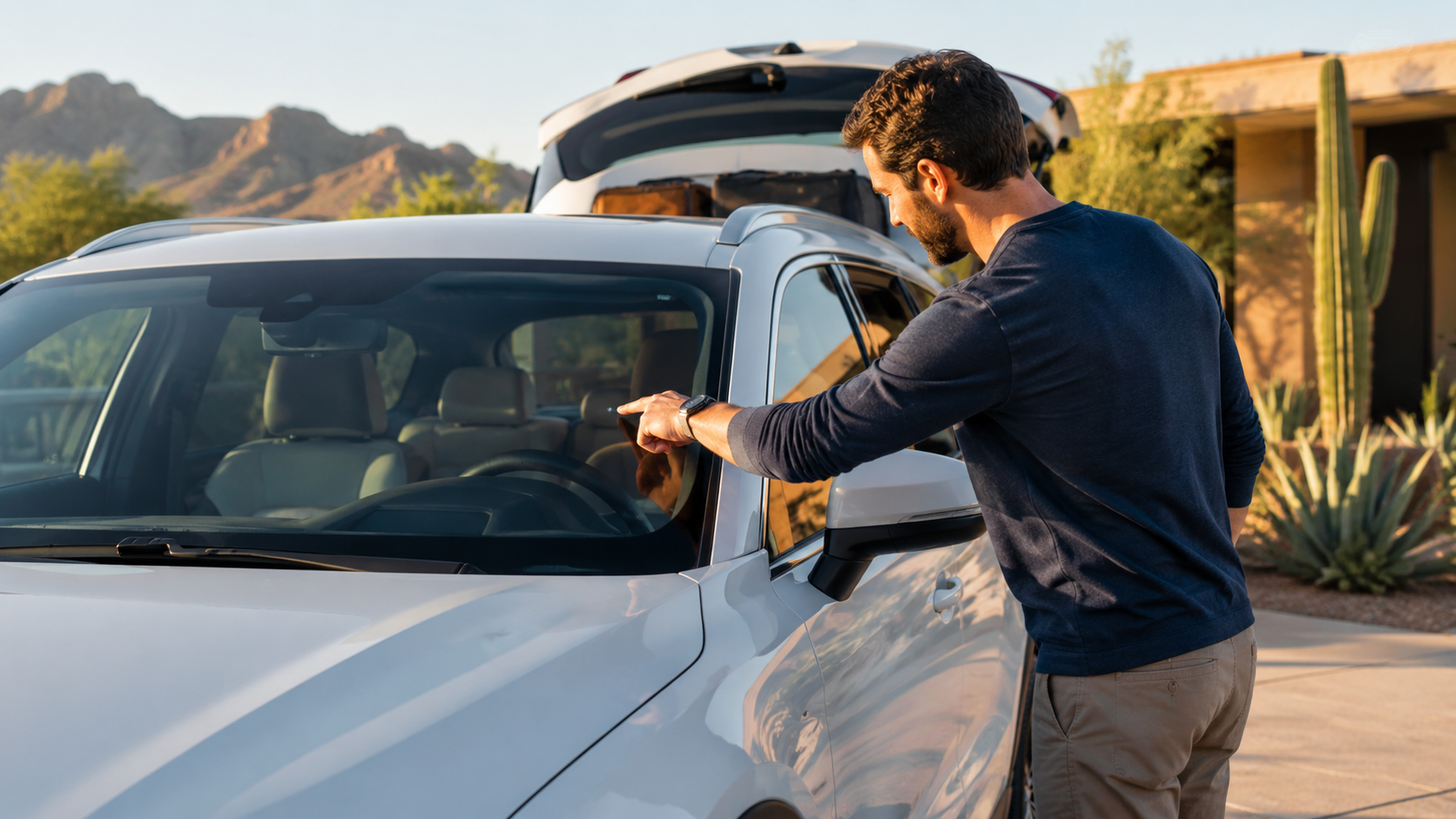
Start by taking clear photographs of the entire crack and its starting point. Avoid driving the RV unnecessarily until the damage can be evaluated, especially if the crack affects the driver's view.
Note when you first saw the crack and what happened beforehand. Was the RV recently driven over rough roads? Was it parked on uneven ground? Did it experience a significant temperature change? Has the windshield been replaced before?
Those details can help the technician understand whether the damage appears related to impact, temperature, installation or movement of the coach.
RV Glass Requires the Right Experience
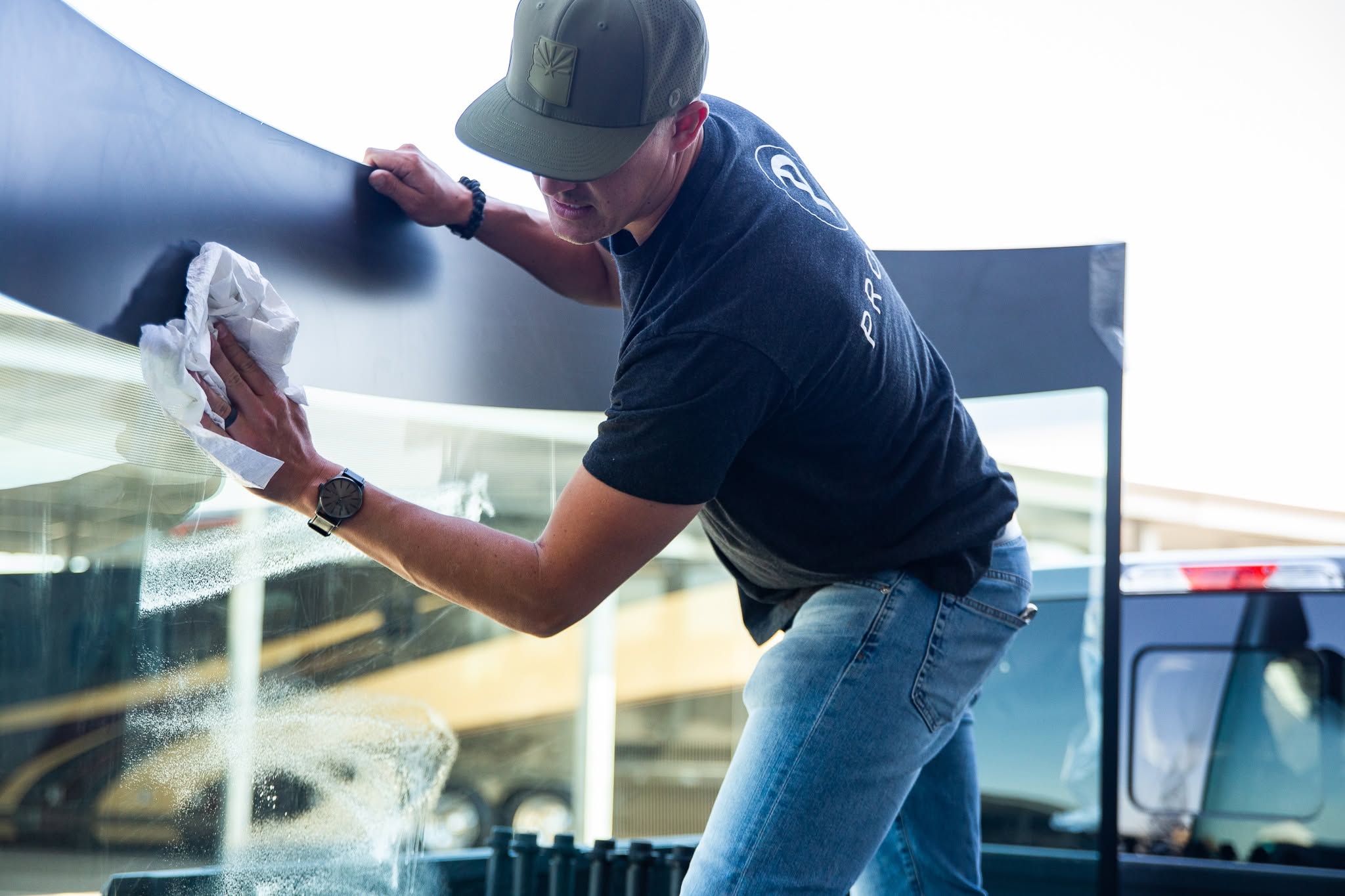
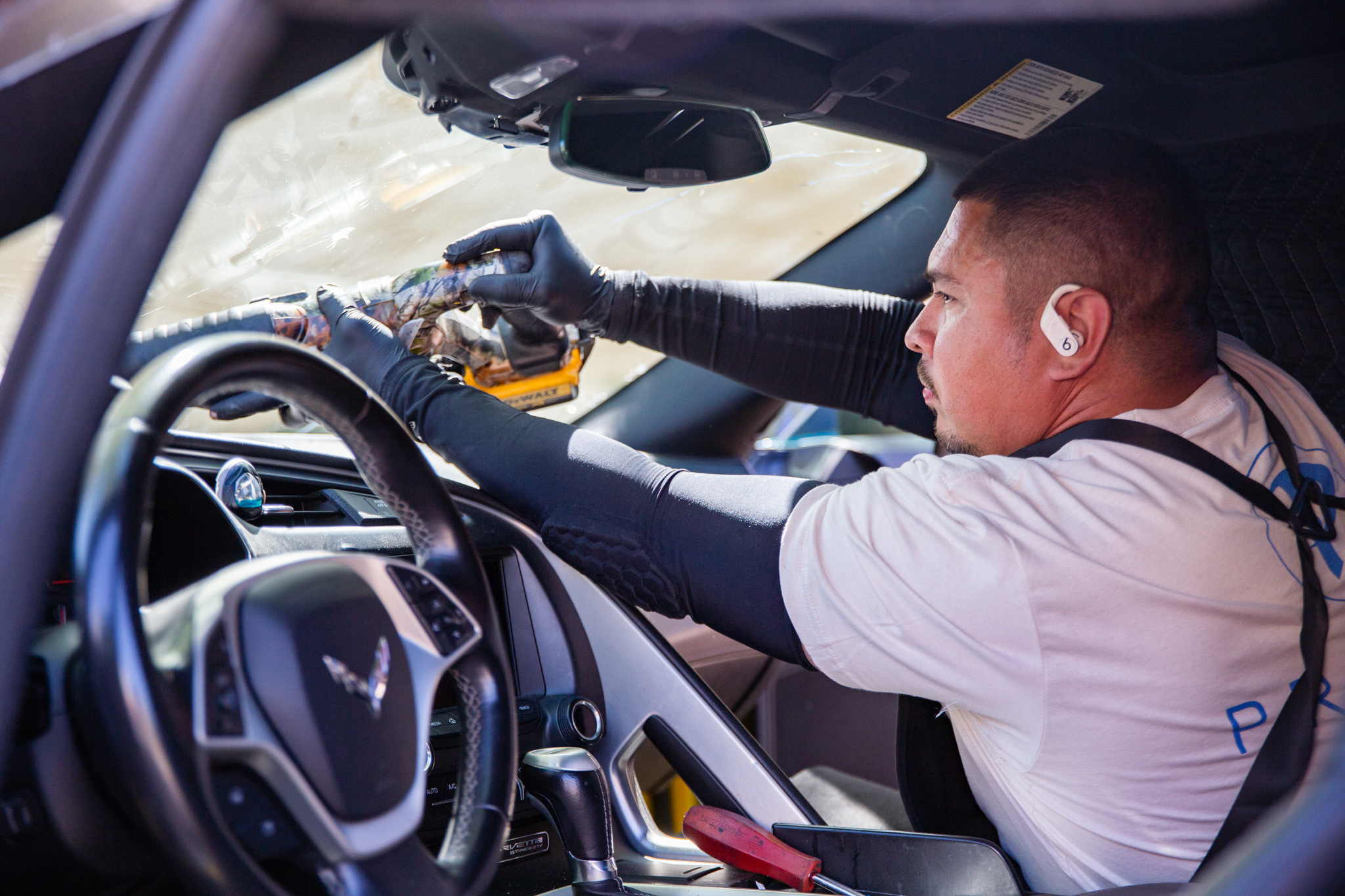
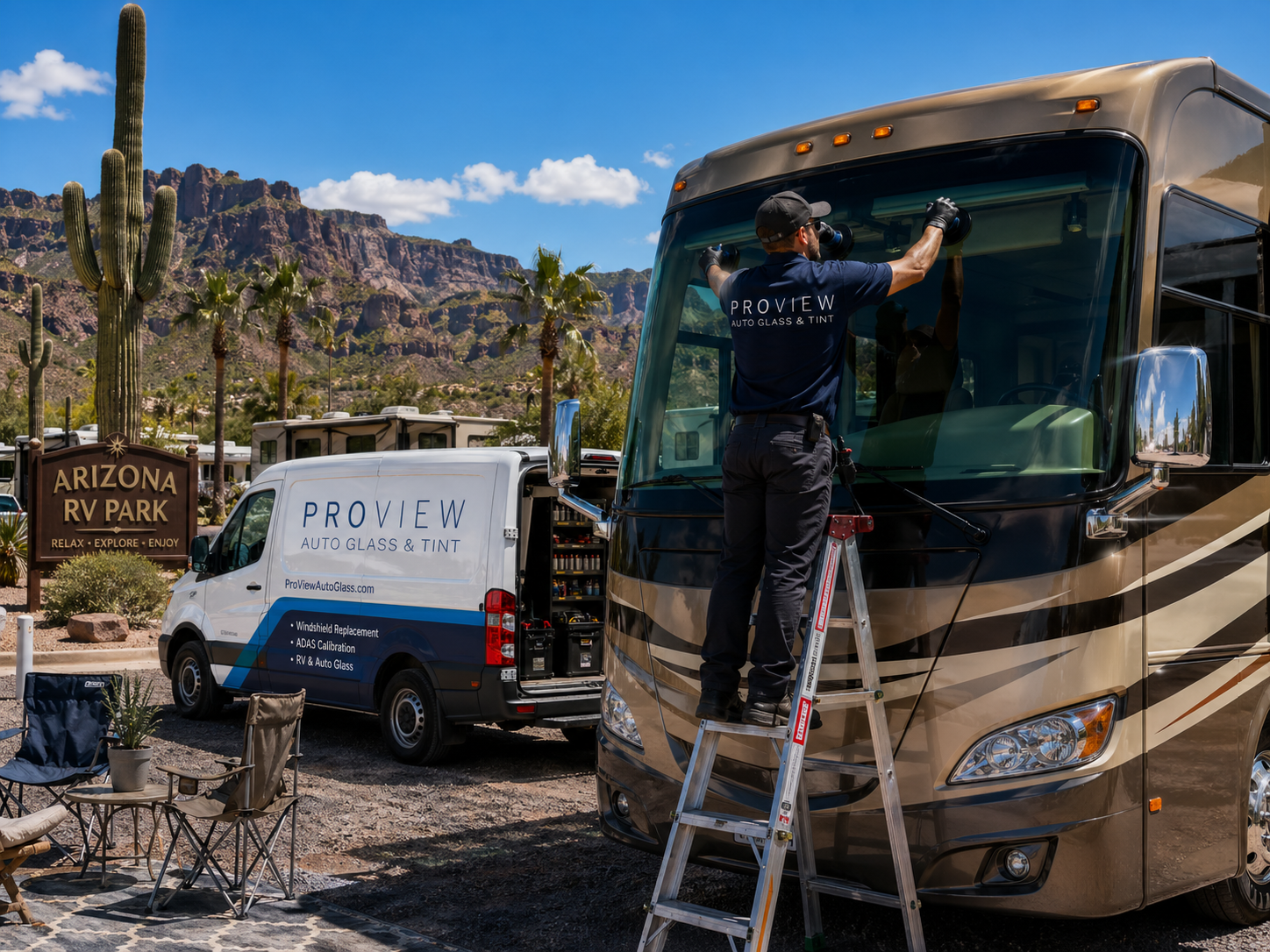
An RV windshield is large, heavy and closely connected to the way the coach is built. Replacing it requires more than simply removing broken glass and installing another piece.
At ProView Auto Glass & Tint, we understand the importance of identifying the correct glass and paying attention to the condition of the windshield opening, seals and surrounding components.
If your RV windshield cracked without an obvious impact, let us take a closer look. Understanding why it happened is the first step toward replacing it correctly and helping you get back on the road with confidence.