The bags are packed. The playlist is ready. Everyone has snacks, sunglasses, and a strong opinion about where to stop for lunch.
But before you back out of the driveway, there is one part of your vehicle that deserves five minutes of attention: your windshield.
Arizona road trips can be tough on auto glass. Highway debris, construction zones, intense sunlight, dust, temperature changes, and long stretches of high-speed driving can turn a minor windshield problem into a major interruption.
The good news? You do not need to be an auto glass expert to spot many of the early warning signs.
Set a timer for five minutes and walk through this quick windshield check before your next Arizona road trip.
Minute One: Look for Chips and Small Cracks
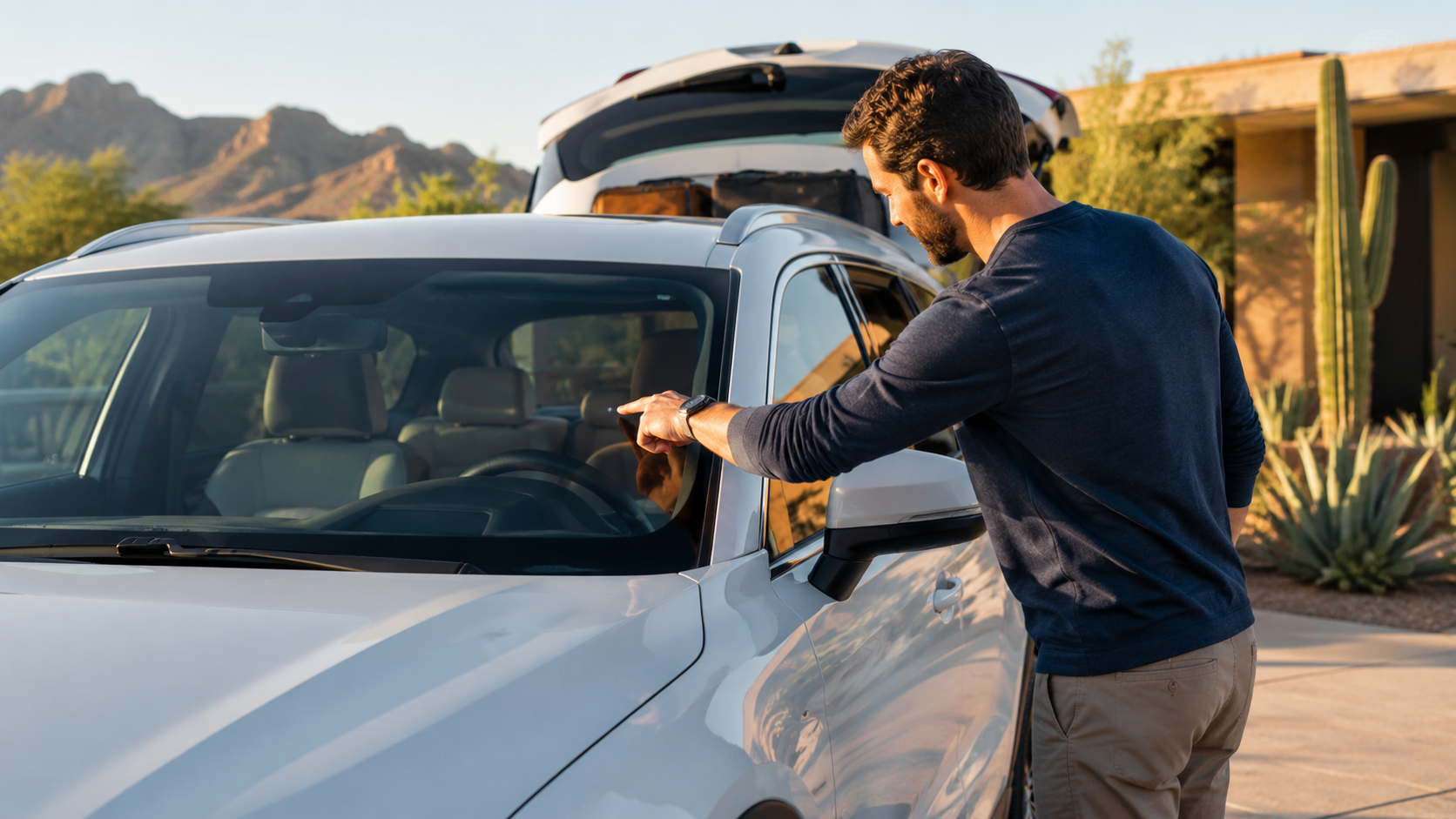
Start by standing outside your vehicle and looking across the entire windshield.
Do not check only the driver's side. Inspect the passenger side, the edges of the glass, and the area behind the rearview mirror. Small chips can be easy to miss when they are hidden by glare, dust, or the darker shaded area near the top of the windshield.
Look for:
- Small circular chips
- Star-shaped impact marks
- Short cracks extending from a chip
- Damage near the edge of the windshield
- Multiple impact points
- Cracks that appear to be growing
Pay special attention to damage near the outer edge of the windshield. The edges experience more stress, and cracks in these areas may spread quickly.
Arizona heat can make an existing chip more vulnerable. When the glass heats unevenly or experiences a sudden temperature change, a minor impact point can become a long crack.
If you find damage, take a clear photo and note its approximate size. Many small chips can still be repaired when they are addressed early.
Minute Two: View the Windshield From an Angle
Now move to one side of the vehicle and look across the windshield at an angle.
This is different from looking straight through the glass. An angled view may reveal issues that disappear when you are sitting in the driver's seat.
Watch for:
- Fine scratches
- Hazy areas
- Pitting from sand and road debris
- Wiper marks
- Optical distortion
- Cloudiness around the edges
- Areas that create unusual reflections
Arizona windshields take a quiet beating from dust, sand, gravel, and highway debris. Over time, the surface may develop tiny pits that are difficult to see during normal daylight.
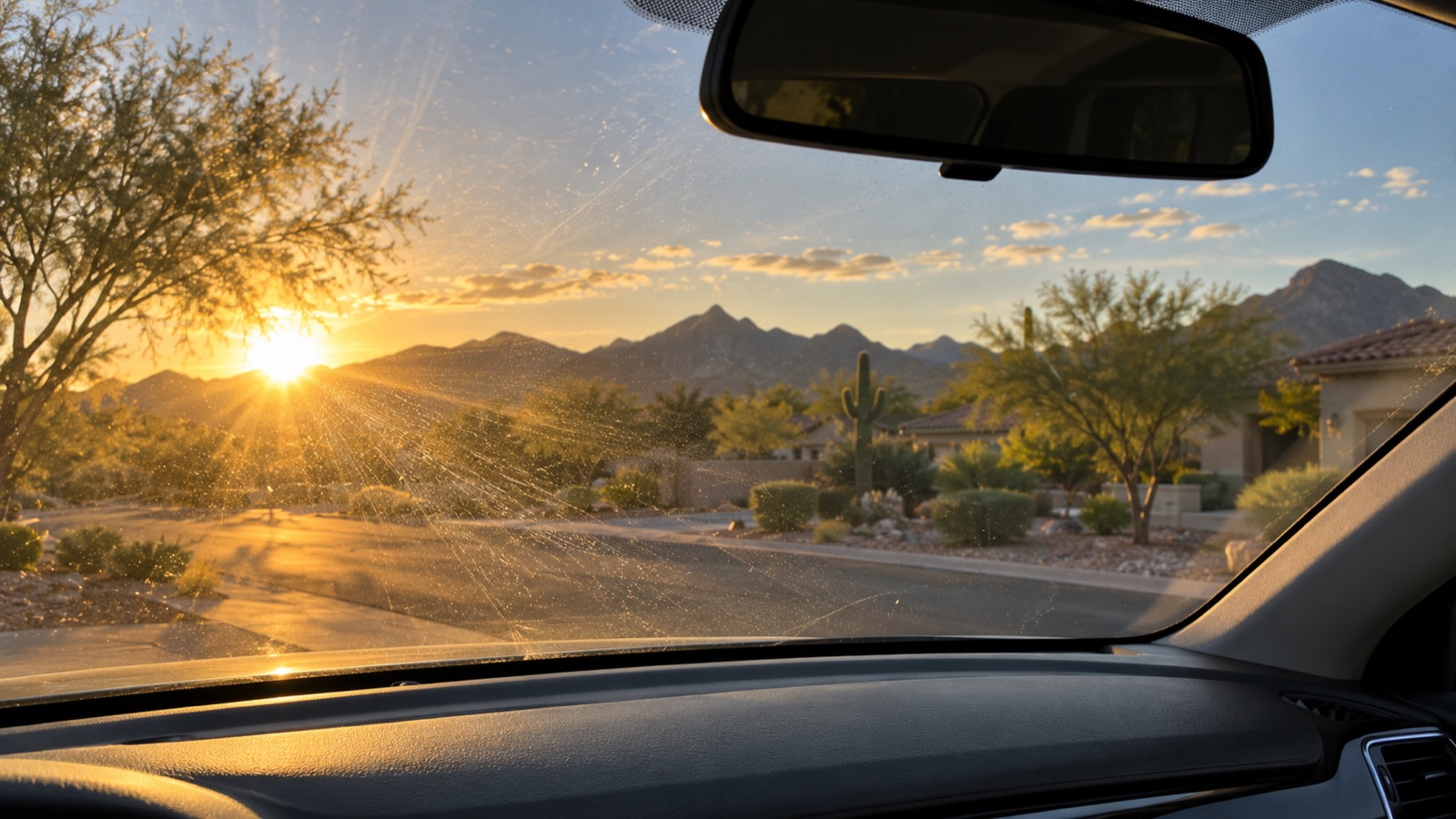
You may notice them most when driving toward the rising or setting sun. Light catches the damaged surface, creating glare that can make the road, lane markings, pedestrians, and other vehicles more difficult to see clearly.
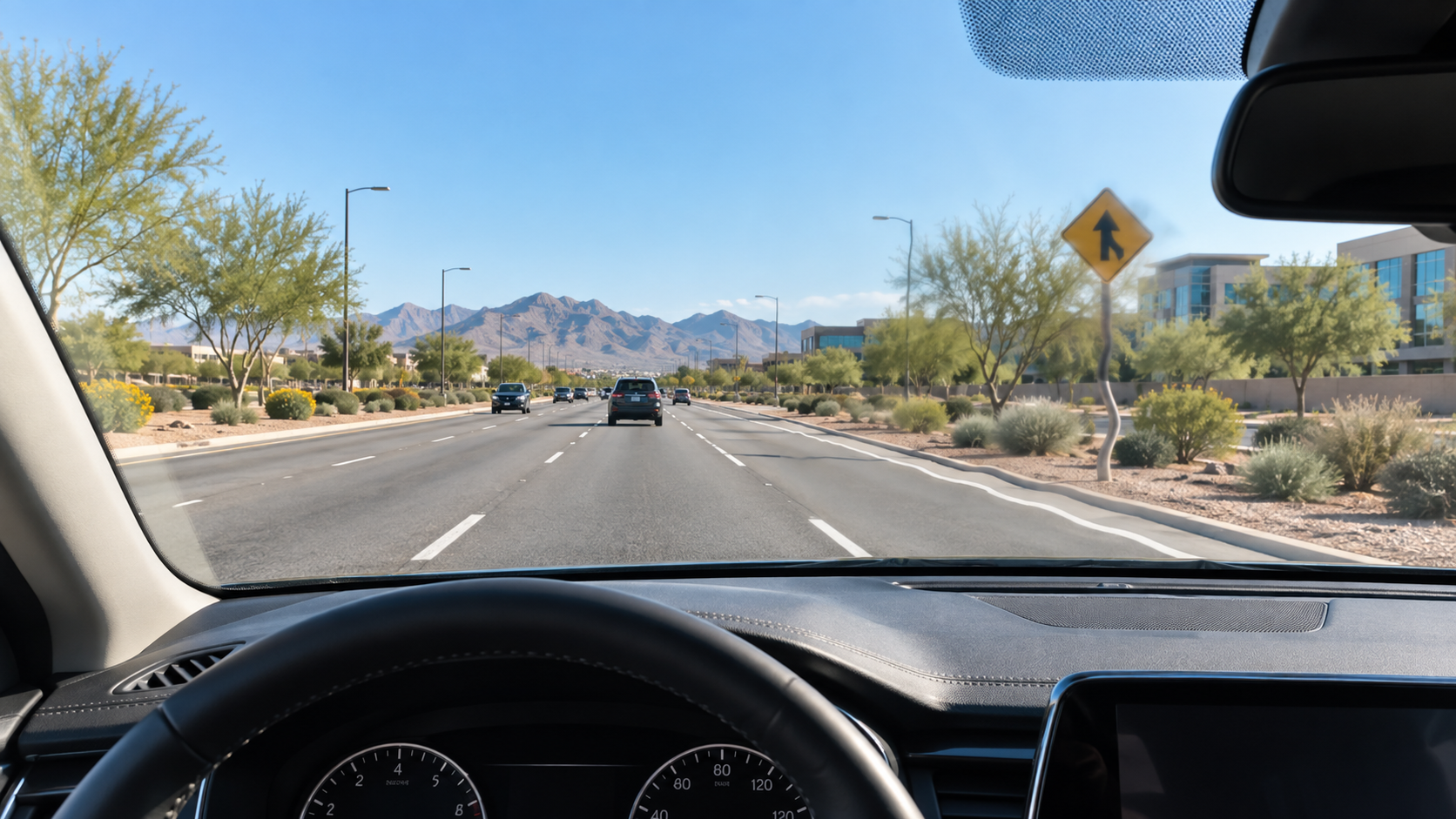
Next, sit in the driver's seat and look through several areas of the windshield. Straight lines outside the vehicle should still appear straight. If objects look wavy, stretched, or distorted through a particular section of glass, the windshield may need professional evaluation.
Minute Three: Test the Washer Fluid and Wipers
A clear windshield is only helpful if you can keep it clear.
Turn on your windshield washer system and let the wipers complete several passes. This quick test can reveal multiple problems at once.
Ask yourself:
- Does washer fluid spray across enough of the windshield?
- Are any spray nozzles clogged or pointed in the wrong direction?
- Do the wipers move smoothly?
- Do they leave streaks or untouched areas?
- Do they chatter, skip, or squeak?
- Is either blade cracked, bent, or separating?
Arizona heat is hard on rubber wiper blades. Even if you rarely use them, the sun can dry them out and reduce their flexibility. You may not discover the problem until a sudden monsoon storm, dust-covered windshield, or swarm of highway bugs makes visibility difficult.
Minute Four: Listen for Wind Noise
This part of the check happens during a short test drive.
Turn down the music, close the windows, and listen as you drive. You are simply listening for a sound that seems new or out of place.
Possible warning sounds include:
- Whistling around the windshield
- A faint rushing-air sound
- Rattling near the glass or molding
- Clicking or creaking over bumps
- Noise that changes when you turn or increase speed
Wind noise does not automatically mean the windshield is unsafe. However, a new whistle after windshield replacement or a sound that seems to come directly from the glass deserves attention.
ProView offers mobile windshield replacement throughout the Phoenix metro area, making it easier to address a glass problem without adding another trip to your schedule.
Minute Five: Check for Camera or Safety-System Warnings
Many newer vehicles use a camera mounted near the top center of the windshield. That camera may support features such as:
- Lane departure warnings
- Lane-keeping assistance
- Forward collision alerts
- Automatic emergency braking
- Adaptive cruise control
- Traffic sign recognition
Start the vehicle and look at the dashboard for unfamiliar warning lights or messages. If your car reports that a camera is blocked, unavailable, or unable to see the road, inspect the windshield area in front of the camera.
The absence of a dashboard warning does not guarantee that every system is perfectly aligned. If your windshield was recently replaced, confirm that the appropriate ADAS calibration was completed.
Learn more about ADAS systems and windshield-mounted safety technology.
Your Five-Minute Road Trip Checklist
Before you leave, confirm that you have completed all five checks:
- Inspected the entire windshield for chips and cracks
- Viewed the glass from an angle for scratches, pitting, and distortion
- Tested the washer fluid and checked wiper condition and performance
- Listened for unusual wind noise
- Checked the dashboard for camera or safety-system warnings
If everything looks and sounds normal, you can hit the road with greater confidence.
If you discover a concern, you have a better chance of handling it from home instead of dealing with it on the side of an Arizona highway.
Do Not Let a Small Chip Choose Your Road Trip Itinerary
A tiny chip may not seem urgent while your vehicle is sitting in the driveway. Add Arizona heat, highway vibration, changing elevation, and hours of driving, and that chip may not remain tiny.
Catching windshield damage before a road trip can help you avoid:
- A crack spreading across your line of sight
- Reduced visibility during sunrise or sunset
- An unexpected stop for emergency glass service
- Possible interference with windshield-mounted cameras
- Turning a repairable chip into a full replacement
If you find a chip, crack, distortion, leak, or unexplained wind noise, ProView Auto Glass & Tint can help you determine whether the windshield can be repaired or should be replaced.
Our mobile team comes to homes, offices, and other convenient locations throughout the Phoenix metro area. When windshield replacement involves advanced safety technology, we can also help ensure the necessary ADAS recalibration is handled correctly.
Five minutes in the driveway could save hours of frustration on the road.
Frequently Asked Questions
Should I Repair a Windshield Chip Before a Road Trip?
It is wise to have windshield damage evaluated before a long drive. Heat, vibration, road conditions, and elevation changes may place additional stress on damaged glass. A chip that can be repaired today may spread and require replacement later.
Can Arizona Heat Make a Windshield Crack Spread?
Yes. Intense heat and uneven temperature changes can increase stress around an existing chip or crack.
Does Every Windshield Replacement Require ADAS Calibration?
Not every vehicle has windshield-mounted driver-assistance technology. However, many newer vehicles do. If a camera or sensor is affected by windshield replacement, the manufacturer may require calibration. ProView can verify what your specific vehicle requires.
Can ProView Repair or Replace My Windshield at My Home?
Yes. ProView provides convenient mobile auto glass service across Phoenix, Scottsdale, Mesa, Gilbert, Tempe, and surrounding Arizona communities.