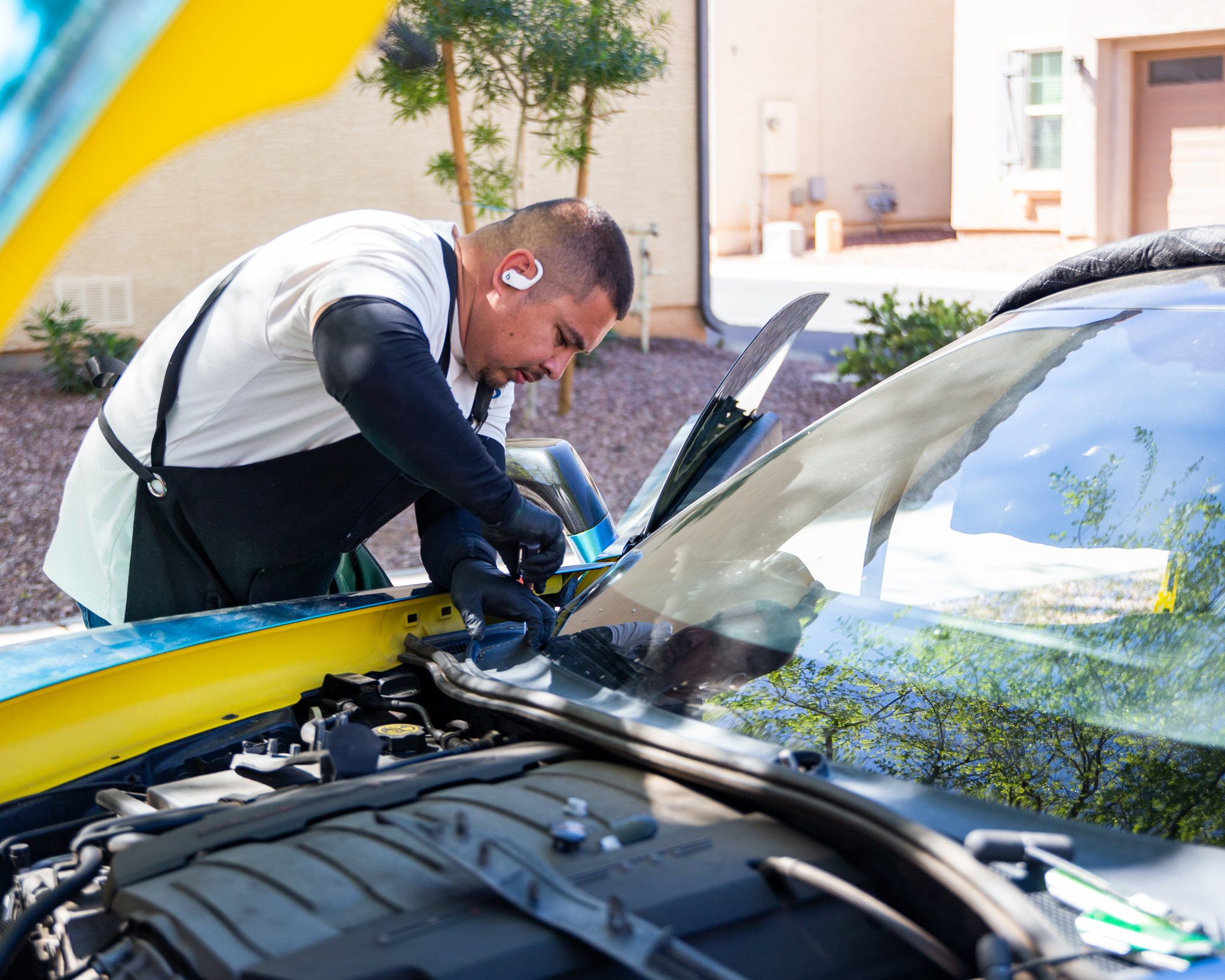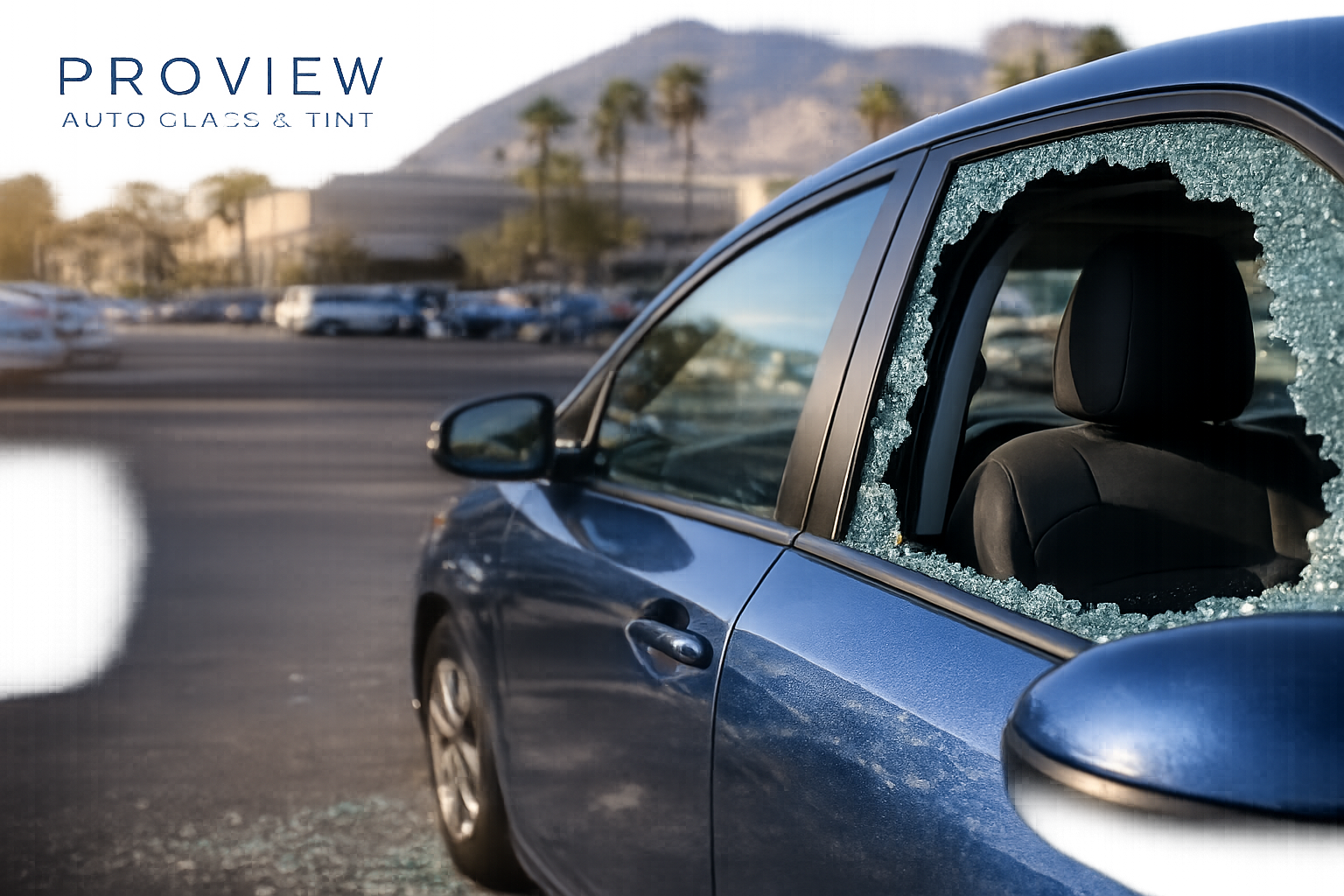
A rock hits your windshield and leaves a chip with a few small cracks. A side window breaks, and suddenly there are little pieces of glass across the seat. Why does one window stay together while another falls apart?
The difference often comes down to how the glass was made.
Vehicles use different types of safety glass for different purposes. Laminated and tempered glass are the two types drivers are most likely to encounter, but their locations aren’t identical in every vehicle. Understanding the basics can help you describe the damage and know what questions to ask when arranging service.
What Is Laminated Auto Glass?
Laminated glass typically has two layers of glass bonded together with a plastic layer between them. That middle layer helps hold the broken glass together when damage occurs.
This is why a windshield can develop cracks without immediately leaving an open hole. The glass has broken, but the interlayer can keep much of it in place. That does not mean a cracked windshield is safe to ignore. Holding together and being undamaged are very different things. www.agc-automotive.com
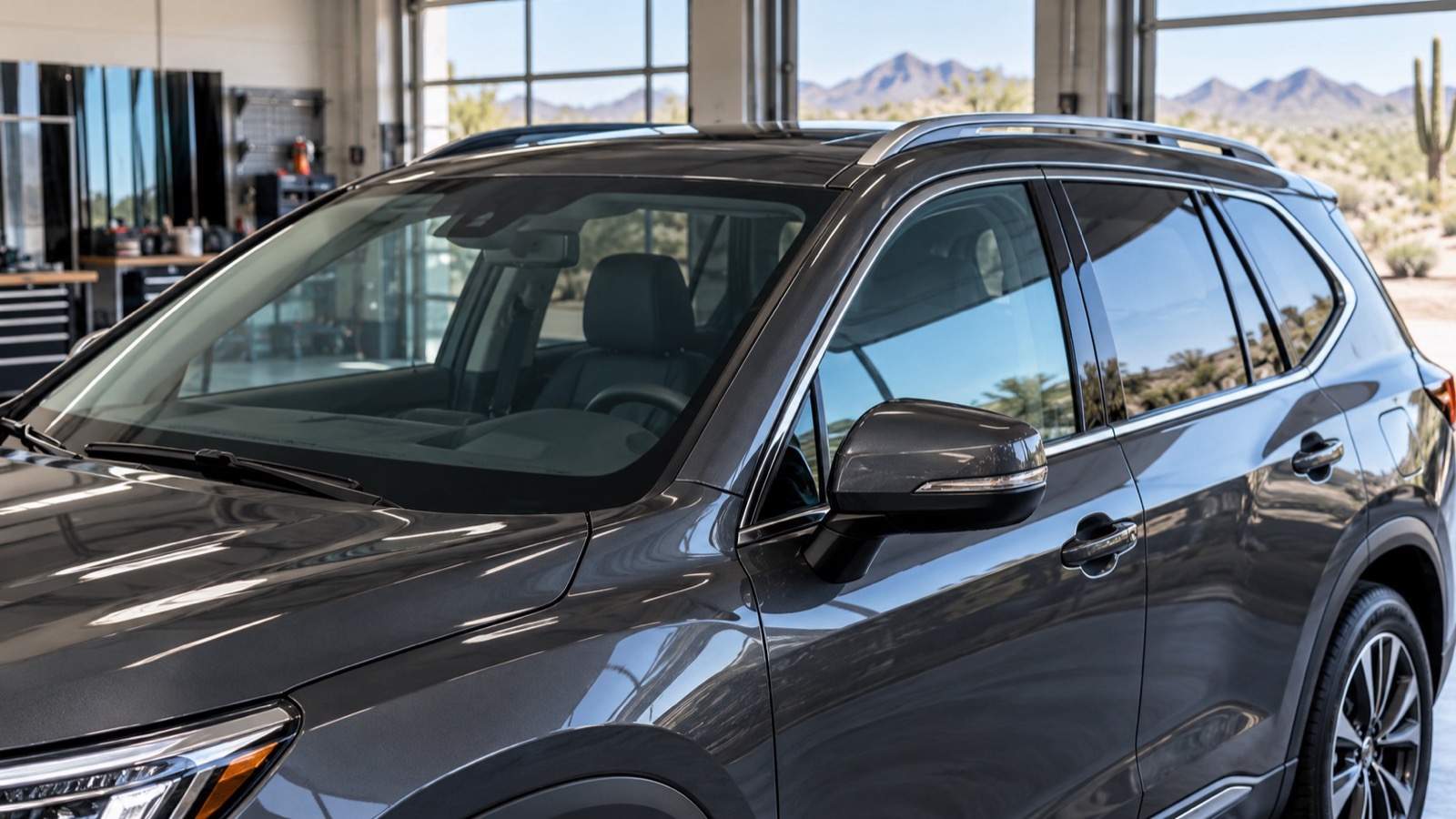
Laminated glass is commonly associated with windshields, but some vehicles also use it in their side windows. Toyota’s vehicle-glass guidance specifically identifies laminated glass in windshields and in the door windows of certain vehicles. techinfo.toyota.com
What Is Tempered Auto Glass?
Tempered glass goes through a controlled heating and rapid cooling process that increases its strength compared with ordinary untreated glass.
When it breaks, it typically separates into many small pieces rather than the long, sharp shards associated with ordinary glass. Those pieces can still cause injuries, so broken tempered glass needs careful handling.
Tempered glass is widely used in side windows, rear windows, and roof glass. Its breakage pattern explains why a damaged door window can suddenly leave an opening and a substantial cleanup job. www.agc-automotive.com
Where Are Laminated and Tempered Glass Located?
Here is a general guide to common applications. The correct glass for your vehicle still needs to be confirmed.
| Vehicle location | Common glass type | What to know |
|---|---|---|
| Front windshield | Laminated | The interlayer helps retain broken glass. |
| Front and rear door windows | Often tempered; laminated on some vehicles | Don’t assume every door window uses the same construction. |
| Rear window or back glass | Commonly tempered | Laminated versions also exist. |
| Sunroof or panoramic roof | Tempered or laminated | Roof construction depends on the vehicle and glass assembly. |
Glass manufacturers offer laminated and tempered products for several overlapping vehicle locations, including side, rear, and roof applications. Location is a useful starting point, but it does not identify the glass with certainty. www.agc.com
Why Some Side Windows Use Laminated Glass
A laminated side window may look much like a tempered one from the outside. Its construction can provide additional benefits, including sound reduction. Acoustic laminated glass uses an interlayer designed to help reduce noise entering the cabin. www.agc-automotive.com
For a driver, the practical lesson is simple: “It’s the passenger window” does not provide enough information to select a replacement.
Your vehicle’s year, make, model, equipment, and existing glass all help identify the correct part. ProView’s approach to vehicle-specific glass replacement starts with matching the glass to the vehicle.
Does the Glass Type Affect Repair or Replacement?
It can. A small windshield chip may qualify for repair, depending on the damage’s size, position, depth, and condition. Laminated construction does not make every crack repairable.
ProView’s windshield chip repair service includes assessing whether repair is appropriate or replacement is the better option. Sending a clear photo gives the team a useful starting point. www.proviewautoglass.com
A tempered window that has shattered into pieces needs replacement. There is no intact pane left for a windshield-style chip repair.
Likewise, a laminated side window should not automatically be treated like a repairable windshield. Its construction, damage, and applicable repair guidance need to be evaluated.
The Right Replacement Involves More Than Glass Type
“Laminated” or “tempered” is only part of identifying the correct replacement. The part must also match the vehicle’s configuration and required features.
For a windshield replacement, that includes checking whether the vehicle requires camera calibration afterward. ProView provides ADAS calibration based on the vehicle’s requirements, using the appropriate manufacturer procedure. www.proviewautoglass.com
You don’t need to become an auto glass expert before asking for help. Share your vehicle details, which window is damaged, and a photo. ProView Auto Glass & Tint can help you understand the next step and confirm the appropriate service.
Request a quote from ProView to get started with glass repair or replacement in Greater Phoenix.
Frequently Asked Questions
Are all side windows made from tempered glass?
No. Tempered glass is common in side windows, but some vehicles use laminated door glass. Confirm the specific window rather than relying on its location alone. techinfo.toyota.com
Is laminated glass unbreakable?
No. Laminated glass can chip, crack, and sustain extensive damage. Its interlayer helps retain broken pieces, but that does not make the glass unbreakable or remove the need for assessment. www.agc-automotive.com
Can a chipped windshield always be repaired?
No. Some chips qualify for repair, while others require replacement. ProView can assess the damage and explain the options. A photograph helps with the initial review, but the final recommendation depends on the glass’s condition. www.proviewautoglass.com